
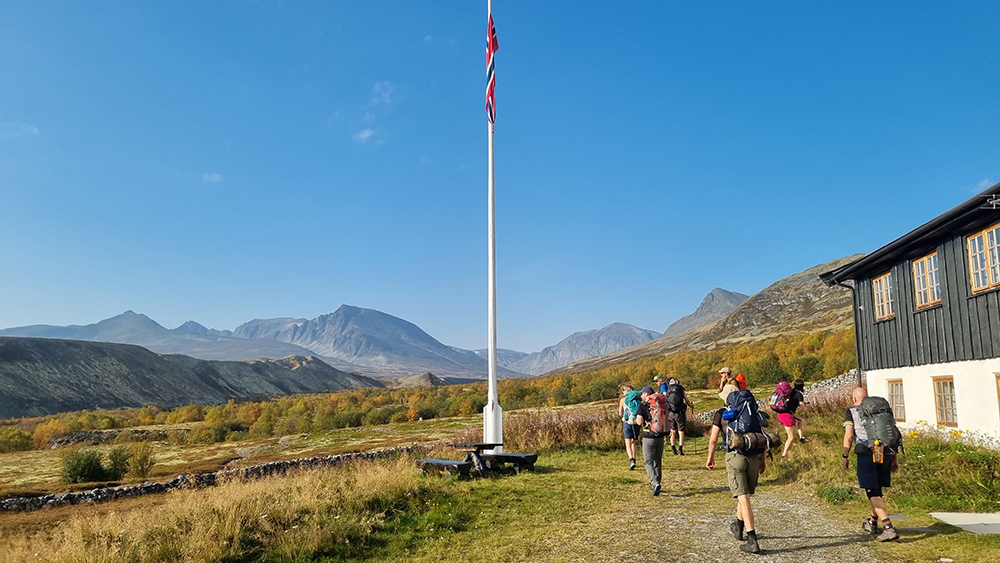
The motivation for this unusual format was thinking differently about how our context impacts the way we think about what we do as researchers. Could we gain something new by being in nature instead of sitting in rooms talking about solving environmental challenges? Within the thematic areas explored during the five days in Rondane were fundamental questions about humanity's relationship with nature and the role of the life sciences and biotechnologies in solving the grand challenges of our time, alongside new ways of framing them.
Nature as the silent stakeholder
The walkshop, organized by DLN and NTNU Health and Life Science, covered approximately 50 kilometers over four days, starting at Grimsdalshytta and concluding at Straumbu. The participants were from the University of Bergen, NTNU, NMBU, UiT and AFINO, alongside invitees from European universities and the Research Council of Norway. They were exposed to the fusion of scientific, philosophical and political aspects of what many call the ‘polycrisis’; the convergence of biodiversity loss, pollution and the climate crisis. How can biotechnology's capacity to address these challenges be seen through a different lens: Through engaging with nature, the ‘silent stakeholder', in thinking and talking about the challenges of our time?
Time to think
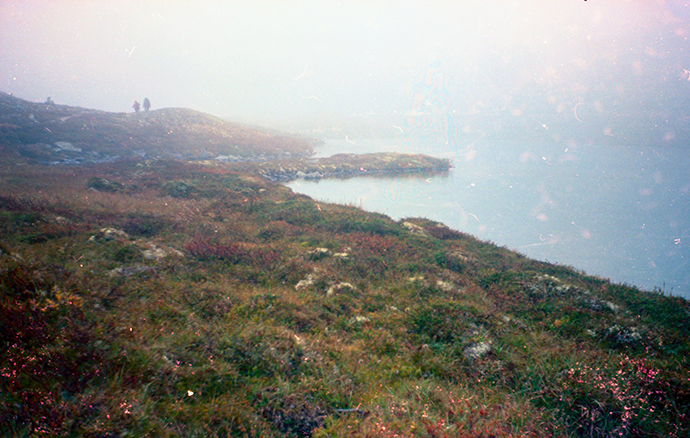
The discussions ranged from ecological ethics, sustainability, and responsible innovation in biotechnology. It also provided a format that is deeply missed in contemporary work life in academia; time for prolonged reflection.
As one participant noted: “The nature of the walkshop really allowed me to focus - often in deep and extended conversations with one or two people at a time and this ability to focus without distractions over extended periods of time allowed for a depth of thinking that is actually very difficult to achieve (and sorely missed) in modern academic life.”
A structure that facilitates time to ponder
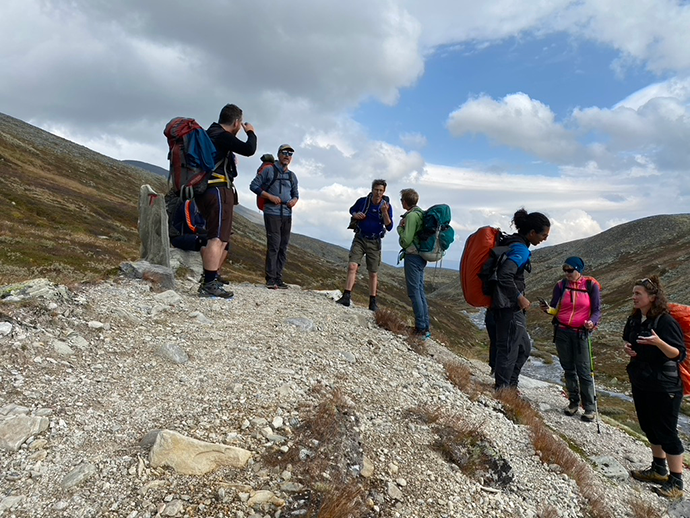
Each day of the journey had a specific theme, with mornings devoted to setting the agenda through short keynotes or guiding questions. As the group hiked, conversations evolved from the keynotes often revisiting issues recurringly during the four days. Evenings at the DNT cabins provided opportunities for plenary sessions to consolidate insights and push discussions further.
Increased dicussion quality
Participants reported that the walkshop format led to increased quality in their discussions. “The combination of being together in nature and having conversations increased my awareness and presence in the discussions.” Another participant noted this from her experience: “It triggered, maybe not a breakthrough, but a deep realisation that the way I teach sustainability and RRI should include reflections of our relationship to nature, not only from a theoretical point of view, but from an experiential/embodied one too.”
The big questions of our time
The walkshop explored topics such as:
- How can we develop more responsible and sustainable approaches in the life sciences?
- What are the ethical and societal implications of emerging biotechnologies?
- How do our perceptions of nature influence our research and innovation practices in biotechnology and other new and emerging technologies?
- Could we move through these ‘turbulent times’ with a different mindset that creates better problem formulations for biotechnology research and innovation?
DLN will use insights to inform future research collaborations
By the journey's end, participants had not only covered significant physical distance but had also traversed new intellectual terrain. The Centre for Digital Life Norway plans to use insights from this walkshop to inform future research collaborations and initiatives in the wake of the RRI work in DLN. One of the main objectives of this work is aiming to foster more holistic and ethically grounded approaches to innovation in biotechnological research.
Read more about the concept of walkshops


