
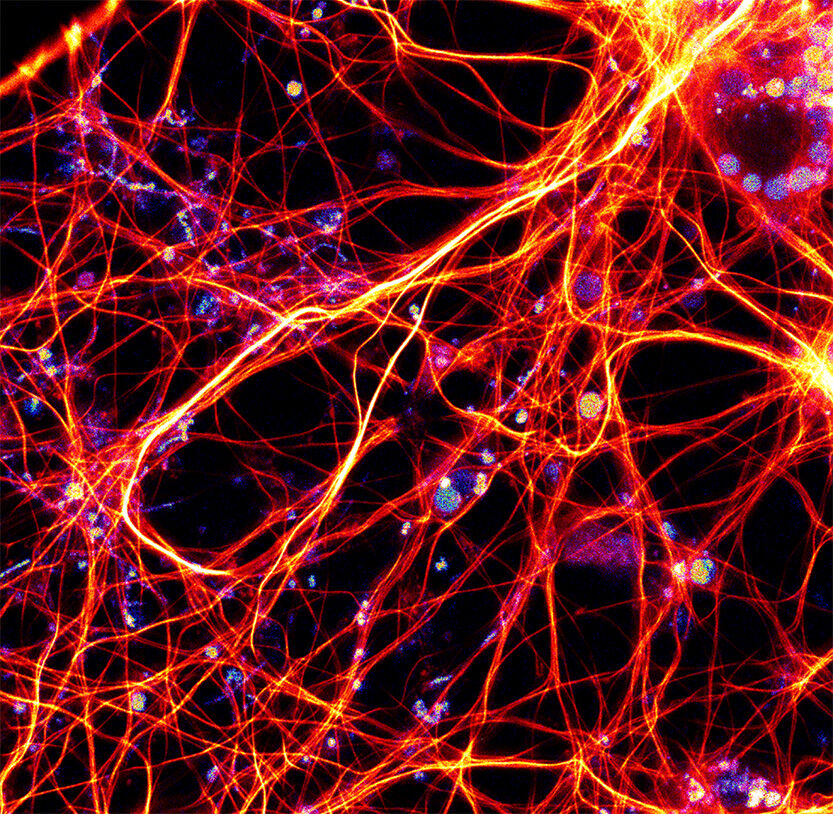
Neurodegenerative disorders result in the loss of neurons and synapses in the brain. Alzheimer's Disease, Parkinson's Disease, and Amyotrophic Lateral Sclerosis (ALS) are examples of these disorders. In Alzheimer's disease, changes in the brain lead to fibril (amyloid) buildup, causing the brain to shrink and brain cells to eventually die. Ways to prevent these amyloids from forming or breaking them down into smaller nontoxic monomers is a promising treatment to improve current patient therapies in clinics.
Budding cooperation with Priavoid on drug discovery
Priavoid and UiT the Arctic University of Norway collaborate under the project “Amyloid-on-chip”, where NANOSPACER was found to be an efficient method to see interactions between Priavoid’s promising prototype drugs and amyloids. The aim of the project is to find an efficient way to screen for medication against neurodegenerative diseases. The NANOSPACER has the potential to reduce costs significantly, since conventional screenings are done with electron microscopy and AFM, which now partially can be replaced with benchtop microscopy.
As Oliver says; “Seeing is believing! Through this method, companies like Priavoid can test how their prototype drugs are working in solution. Imagine a video of Alzheimer’s disease being broken down by medicine – how amazing that would be!”
About Priavoid
The German company Priavoid (Priavoid – Targeting neurological disorders ) is a clinical-stage drug developer. The company develops novel all-D-peptide drug candidates for the treatment of neurodegenerative diseases such as Alzheimer’s, Parkinson’s, ALS (amyotrophic lateral sclerosis) or tauopathies. All drug candidates are designed with an anti-prionic mechanism of action to dissolve neurotoxic protein aggregates. Priavoid is a spin-off of Heinrich Heine University Düsseldorf and Research Center Jülich and was founded in 2017. The company is privately financed, including by Qiagen co-founder Prof. em. Dr. Dr. h.c. Detlev Riesner.
Priavoid collaborators are Nadine Roesener, Marc Sevenich and Antje Willuweit.
Coming full circle
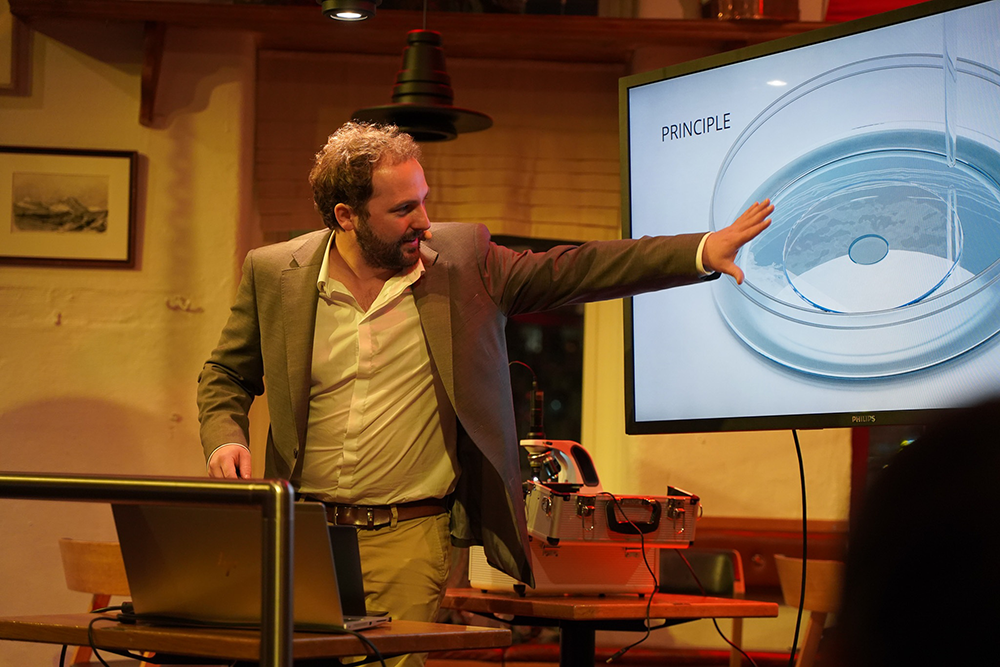
Oliver took his PhD at Cambridge at The Centre for Misfolding Diseases (Research | Centre for Misfolding Diseases) and came to Norway to become a research group leader using nanofluidics for dementia research and biotechnology. With these new findings he hopes to give other Scandinavian researchers the opportunity to improve their assays and realize their ideas against neurodegeneration.
“To be able to use the NANOSPACER for this purpose is very meaningful to me… as it is a way to give back to society and share what has been developed by many brilliant people at numerous universities over the years. Collaborations like these with Nadine Roesener and Marc Sevenich from Priavoid and my colleague Kevin Baumann are key for finding solutions. This topic is relevant to all of us… We need solutions – the sooner the better!”