
Her report “Magnetic decoration of Escherichia coli loaded with Palladium nanoparticles” was excellent blend of Biology and Physics. Using sophisticated equipment of Magnetic Force Microscopy on nanometre scale and “borrowing” from superconductivity technique of magnetic decoration that was once used for confirming quantisation of magnetic flux, it was possible to greatly enhance magnetic signal of previously non-visible tiny palladium nanoparticles. This paper is already published, indexed in Scopus & Web of Science and available free of charge for users from University of Oslo.
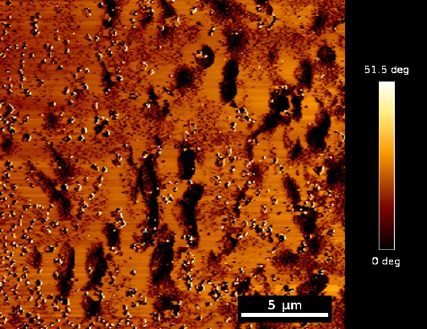
Additionally to this, Ana Lucía Campaña is co-author of another paper presented on this conference, in which magnetic nanoparticles were used to improve properties of superconducting films, “Using Magnetic Nanoparticles to Improve Flux Pinning in YBa2Cu3Ox Films”. The group of Prof. P. Mikheenko, who is one of the main collaborators in the BEDPAN project, presented two more papers: “Identifying Magnetic Phases in Additively Manufactured High-Entropy Alloy FeCoNiAlxMnx” and “Magnetic Force Microscopy of Brain Microtubules”. In the last paper, experimental evidence of ideal diamagnetism in the brain microtubules was given confirming phenomenon of room-temperature superconductivity in living organisms. The paper has direct relevance to the Digital Life Norway project.