
As the senior adviser for RRI at DLN, I’m frequently asked: “How do you actually ‘do RRI’? When should we ‘do RRI’? What are the benefits?” It would certainly be simpler if there were one clear answer but given the wide range of projects within the DLN portfolio, I believe no single response can capture it. While there are guiding principles, these are broad and must be tailored to the specific context of each project. In essence, every project must take the time to define what ‘doing RRI’ looks like for them.
ENIGMA workshop to address societal relevance
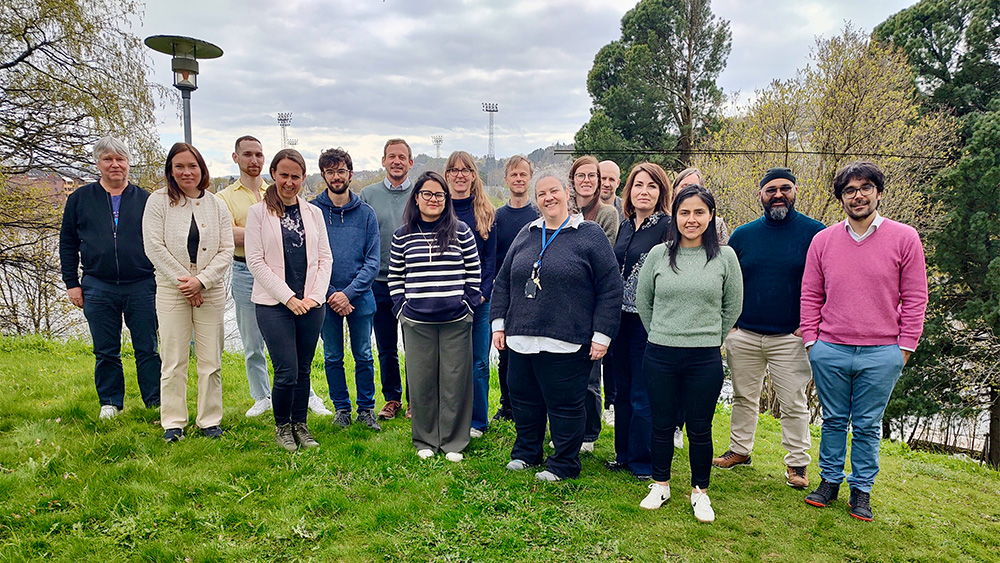
Just last week, a DLN member project—ENIGMA —Enabling natural photonics through genetic manipulation of diatoms, hosted a workshop at the The Royal Norwegian Society of Sciences and Letters, Trondheim. The motivation behind the project:
“Photonics, the manipulation of light on the nanoscale, is a foundational technology with the potential to address many societal and global challenges. Photonic crystals (PhCs) are essential elements of photonic technologies that enable light control even in three dimensions; however, current nanofabrication techniques are neither environmentally sustainable nor cost-efficient.” ENIGMA seeks to address this issue.
Although the scientific approach is fascinating in its own right, the workshop’s main goal was to step beyond the lab and reflect on the societal relevance, desirability, and acceptability of the technology. Throughout the day, we engaged in an anticipatory exercise exploring the potential futures this technology could shape.
The issues discussed
-
Biodiversity and the Nagoya Protocol: The project entails moving microalgae across national borders. How do the legal and regulatory frameworks governing this effect research and development?
-
Gene editing: ENIGMA uses CRISPR/Cas9. How might current or future regulations on gene editing influence the project? And how are concerns around ‘naturalness’ addressed?
-
Dual use: The technology may also have military applications. To what degree do researchers consider their responsibilities concerning potential military use?
-
Expertise: Emerging technologies often require new kinds of expertise but can also render certain existing skills or industries obsolete. Which sectors might this technology disrupt?
-
Whack-a-mole effect: Improving current processes for environmental sustainability is undeniably valuable. Yet, such progress still relies on standard lab materials like chemicals, plastics, and glassware. What new challenges are created when solving one major issue?
-
Affordability and accessibility: A technology that improves environmental outcomes is certainly appealing. However, adopting it might demand infrastructural changes, which can be expensive. How accessible and affordable is this solution?