
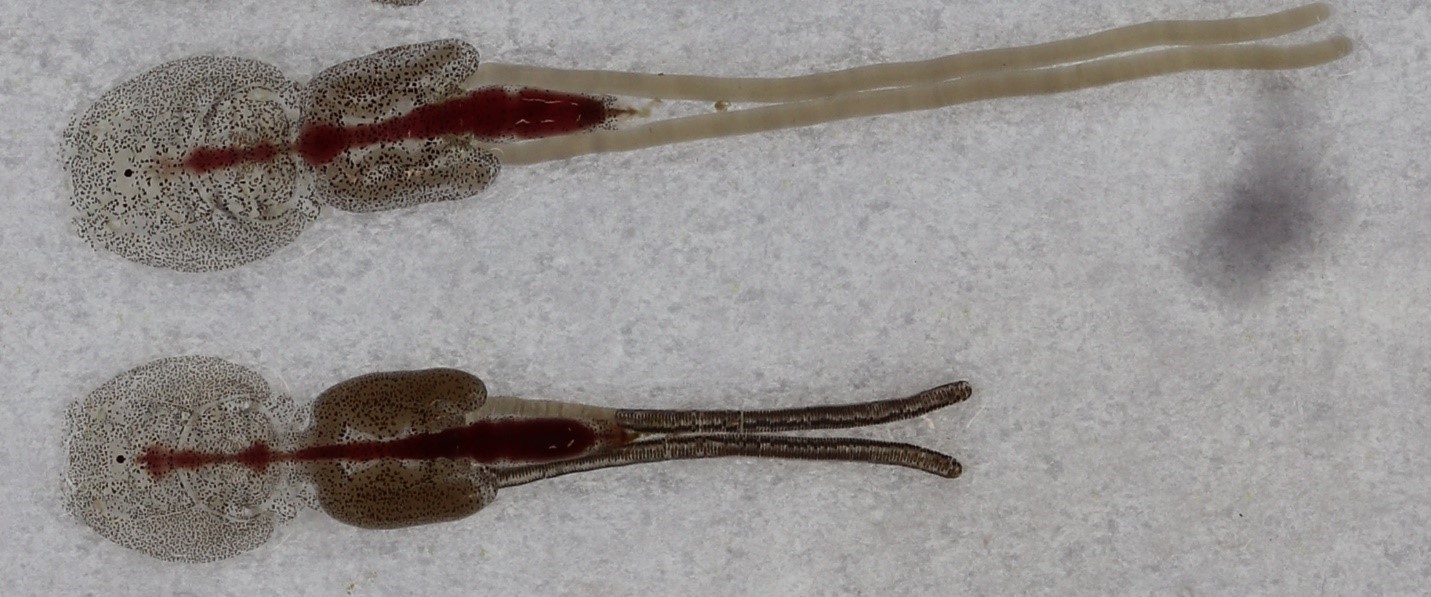
We at LiceVault are delighted to have published our first paper on the major vault protein (MVP) and Vault in the salmon louse [1].
Vaults are the largest known ribonucleoprotein complexes known (approximately three times the size of a ribosome) and are expressed in most animal tissues. They likely have been present already in the last common ancestor of all Eukaryotes. Despite their gigantic size and near omnipresence, vaults and MVP have never made it into cell biology text books. This may be due to their - after almost 40 years since their discovery - still enigmatic function [2].
Here we establish for the first time that Vaults and MVP may have an extracellular structural and potentially reproductive function while most previous research focused on intracellular roles such as signaling and drug resistance. Vaults have sometimes even been called organelles and our findings give rise to the assumption that this designation is not correct. Using the salmon louse sequences, we also found that MVP and vaults may be present in most arthropods and Ecdysozoa (including nematodes and basal insects) unlike previously thought. But there also may exist many more gene loss events in this group.
Our research casts a spotlight on these understudied protein complexes and also prompts us to rethink their roles in human disease, such as cancer, and multi-drug resistance.
1: Slinning, M.S., Nthiga, T.M., Eichner, C. et al. Major vault protein is part of an extracellular cement material in the Atlantic salmon louse (Lepeophtheirus salmonis). Sci Rep 14, 15240 (2024). https://doi.org/10.1038/s41598-024-65683-0
2: Travis, J., The Vault Guy, Science (2024). https://doi.org/10.1126/science.zr5g3cu