
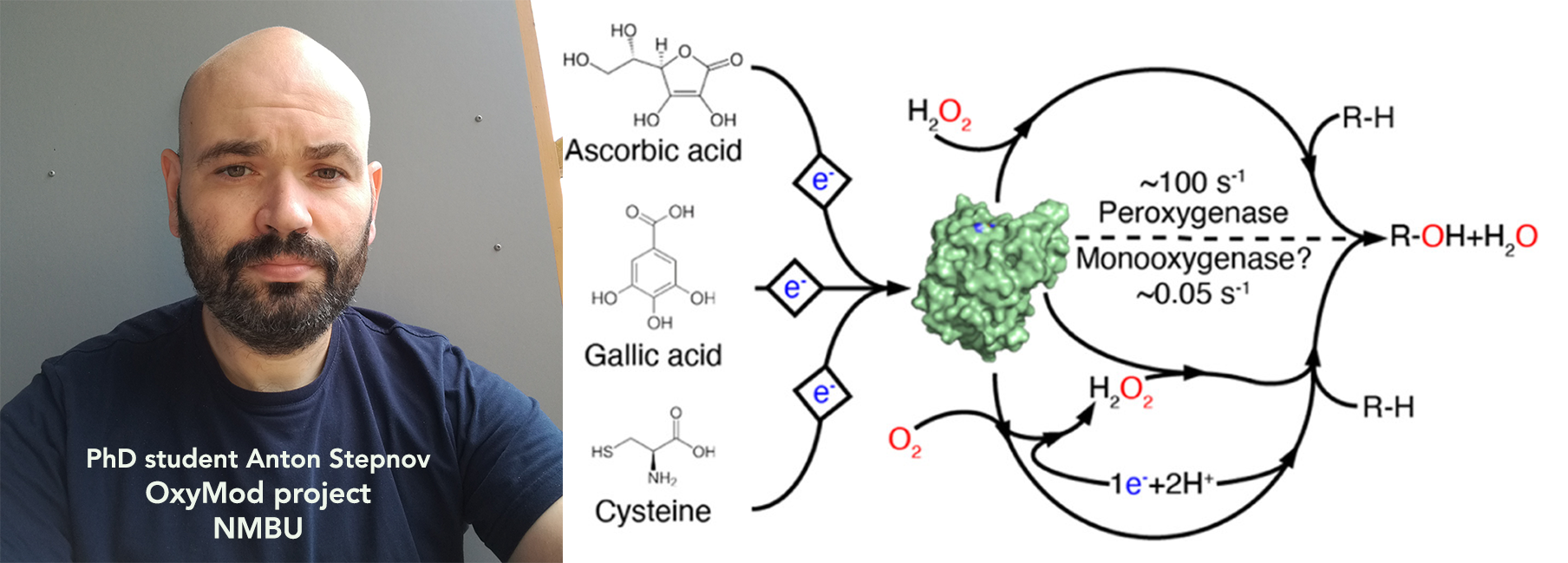
These enzymes, which are far from regular cellulases, need reducing equivalents and hydrogen peroxide to function optimally and this complicates the analysis and understanding of how exactly these enzymes work. In fact, although LPMOs are used industrially world-wide, it has turned out very difficult to fully harness the potential of the powerful and unique enzymes.
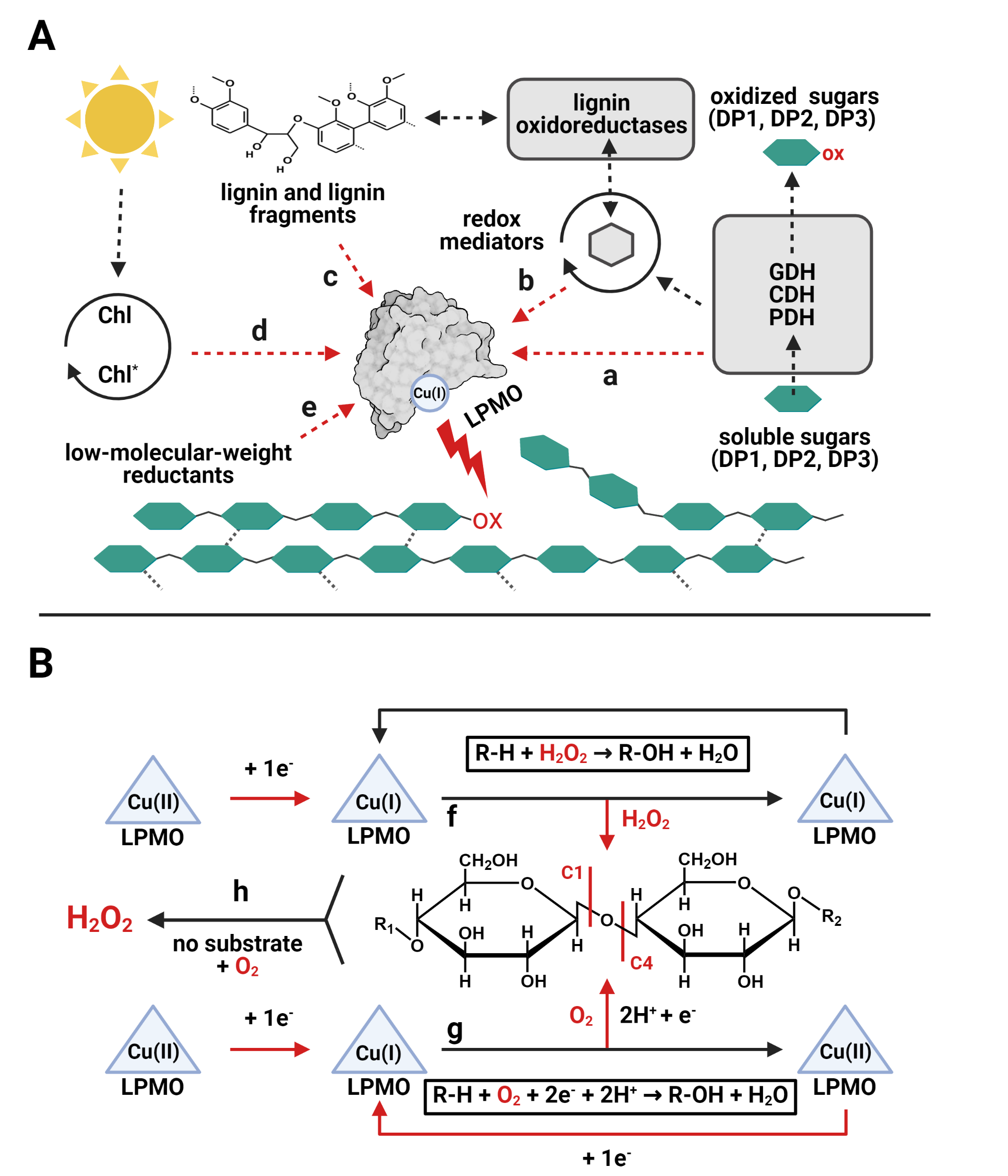
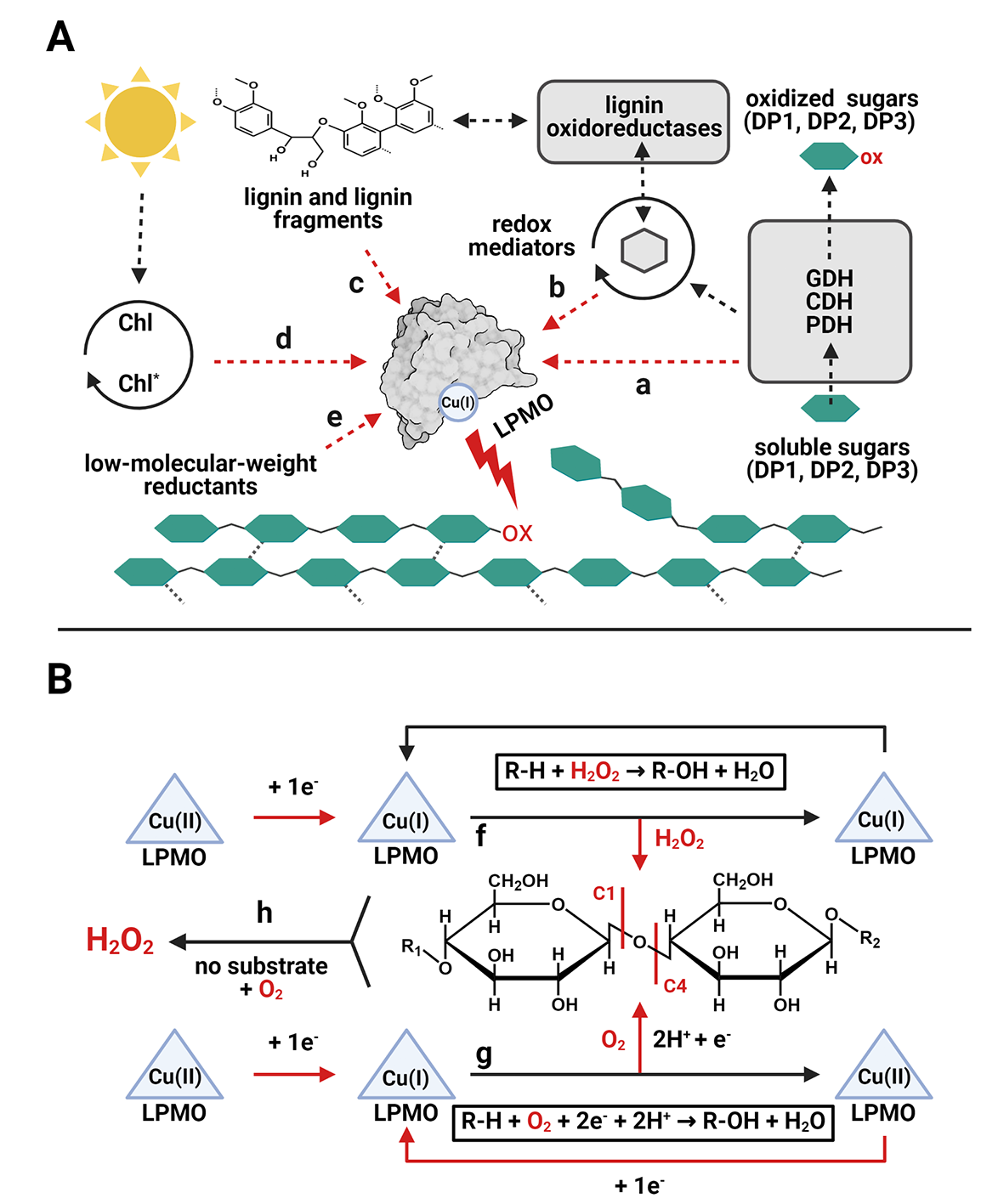
In a series of 2021 papers, OxyMod PhD student Anton Stepnov and his colleagues shed light on these complicated issues, which need to be understood if OxyMod’s overall goal, namely the understanding, modeling and (industrial) development of enzyme systems for biomass conversion is to be achieved.
- The impact of reductants on the catalytic efficiency of a lytic polysaccharide monooxygenase and the special role of dehydroascorbic acid. Stepnov AA, Christensen IA, Forsberg Z, Aachmann FL, Courtade G, Eijsink VGH. FEBS Lett. 2021 Nov 29. doi: 10.1002/1873-3468.14246.
- Fast and Specific Peroxygenase Reactions Catalyzed by Fungal Mono-Copper Enzymes. Rieder L, Stepnov AA, Sørlie M, Eijsink VGH. Biochemistry. 2021 Nov 30;60(47):3633-3643. doi: 10.1021/acs.biochem.1c00407.
- Unraveling the roles of the reductant and free copper ions in LPMO kinetics. Stepnov AA, Forsberg Z, Sørlie M, Nguyen GS, Wentzel A, Røhr ÅK, Eijsink VGH. Biotechnol Biofuels. 2021 Jan 21;14(1):28. doi: 10.1186/s13068-021-01879-0.