Resources for responsible research
This page offers a list of resources on responsible research and innovation. It will grow over time. Is there anything we missed? Drop us a line.

What you need to know about responsible research and innovation in the Digital Life Initiative
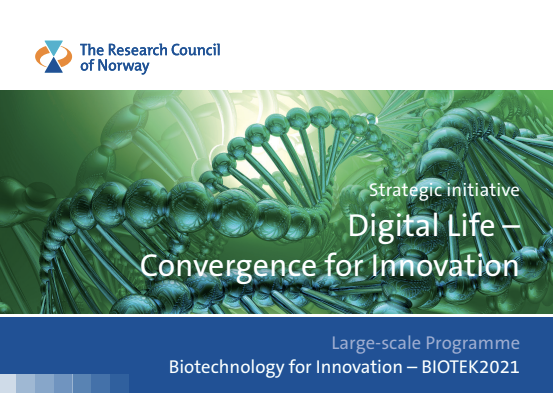 The white paper "Digital Life – Convergence for Innovation" (PDF) sets out the strategic vision behind the Digital Life initiative.
Responsible research and innovation (RRI) is a research policy. The Research Council Norway's definition of responsible research and innovation as it applies to the funding programmes BIOTEK20201, IKTPLUSS, NANO2021 and SAMANSVAR. This definition builds on the article "Developing a framework for responsible innovation" by Jack Stilgoe et al (paywalled).
Stilgoe presents the framework's concepts in this talk:
The case for responsible research and innovation
Prof. Wiebe E. Bijker argues that responsible research and innovation enables better research.
Professor Ulrike Felt talks about responsible research and innovation as a trial and error experiment in how scientists and other members of society come to shape their common future.
Professor Roger Strand puts responsible research and innovation into the context of sustainability.
Inspiration for how you can leverage responsible research and innovation in your research project
Integrating responsible research and innovation in biotechnology research may benefit from social science and humanities expertise, write Ana Delgado and Heidrun Åm in PLOS Biology, but caution that a genuine commitment to interdisciplinary collaboration is required.
There are several websites that offer concrete advise to scientists (and other groups concerned by research policy) about to to implement RRI within research.
RRI tools is a comprehensive platform for all things RRI. It offers background material on RRI and hosts concrete tools, many of which were developed through projects funded by the European Commission. The Commission's RRI 'keys' are prominent because much of the website's content has been developed in Horizon2020 funded projects. See here for an explanation of the difference between the Norwegian and European definitions of RRI. For people who are new to RRI or to research policy, the volume of content on RRI tools might be intimidating.
If your main objective is to involve members of the public in your research, INVOLVE UK offers hands on advice in form of briefings, cases and templates. This is a health research focused resource, but many lessons can be adapted to other research contexts.
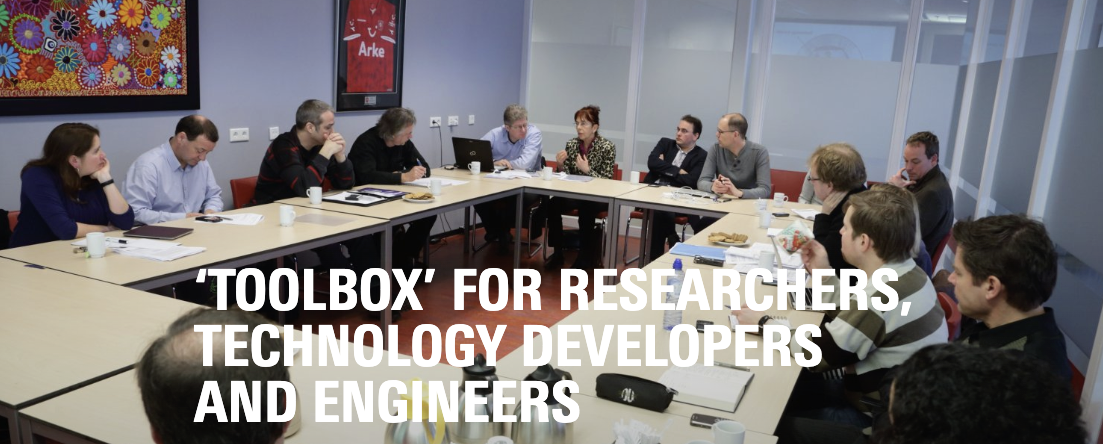
'Toolbox' for researchers, technology developers and engineers is a small but fine collection of tools that are broadly addressing how you can become aware of the downstream consequences of your research.
Have you ever wondered about the sex of the eukaryotic cell line you are working with? Gendered innovations provides cases and resources to consider sex and gender in research.
And if you are part of a team preparing for the iGEM competition or otherwise work in synthetic biology, head over to the iGEMers guide to the future to brainstorm through the societal aspects of your proposal. iGEM uses the idiosyncratic notion of 'human practices' and not RRI to talk about societal aspects, but there is no substantive difference.
Contact
Anders Braarud Hanssen 
Senior adviser responsible research and innovation (RRI), employed at NTNU
Anamika Chatterjee
Senior adviser responsible research and innovation (RRI), employed at NTNU
 Roger Strand
Member of expert task force, Professor at UiB
E-mail: roger.strand@uib.no
Funding opportunities
-
Apply to our Industry Internship Program! May 22, 2026 3:57 PM
-
Support for data management in DLN Oct. 9, 2025 2:17 PM
-
Call: Support for Digital Life Norway cross-project activities 2025 May 23, 2025 1:35 PM
-
Call: Digital Life Industry Internship 2025 Feb. 3, 2025 2:26 PM
-
Apply for our Postdoc Internship Program Jan. 15, 2025 8:27 AM
-
Call for candidates: The DLN FAIR data award 2024 Dec. 20, 2024 11:22 AM