
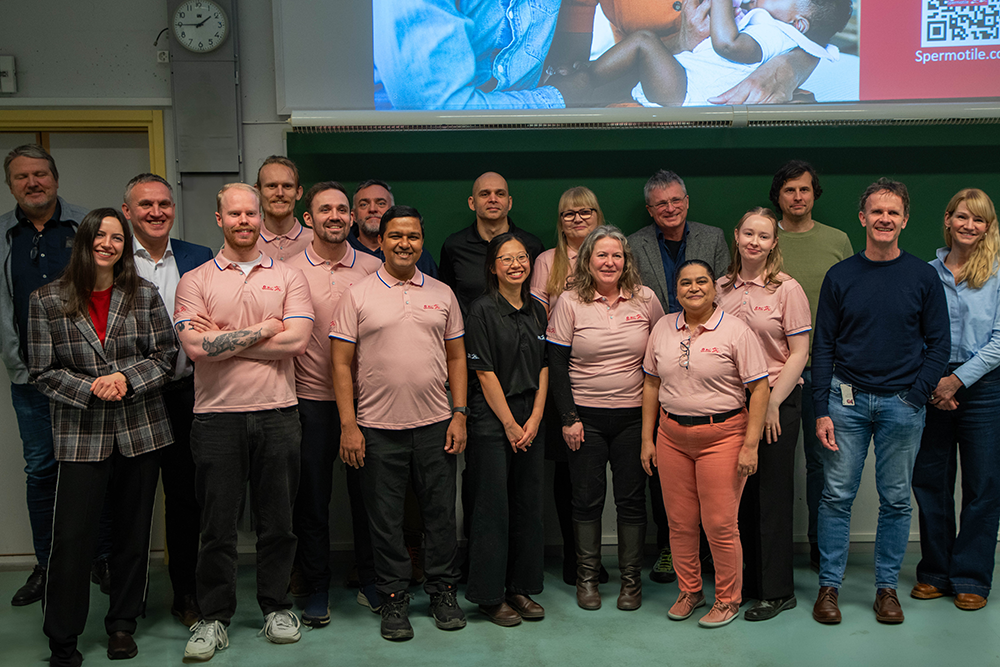
The kickoff event drew a diverse team of experts, including programmers, artificial intelligence researchers, business strategists, fertility specialists from the University Hospital, and microscopy data analysts. While many participants have been deeply immersed in their individual work packages, the meeting provided an opportunity to see how their respective efforts fit into a larger ecosystem, united by a shared scientific and clinical objective.
Spermotile’s roots trace back to 2017, when the groundwork was laid through the gradual development of intellectual property. Over the years, the project has matured by integrating cutting-edge technologies and expertise, ensuring a solid foundation for commercial viability.
Krishna, the head of the project group and the public face of Spermotile, was commended for her clear vision and unwavering dedication. Tore Guneriussen (the administrative head of the faculty of science and technology) described her as “demanding” - a characterization towards positively redefining the limits of research and innovation at the faculty. Her high expectations have helped those leaders in the room from university support structures rally effectively around the project’s ambitious goals.
Asbjørn Lilletun, the CEO of Norinnova (UiT technology transfer and innovation arm) expressed confidence in the project’s potential impact and praised the synergy among contributors. Markus Rumpsfeld, the head of the Innovation Center at University Hospital of North Norway emphasized how Spermotile has been able to create new possibilities through collaborations and innovation for societal impact.
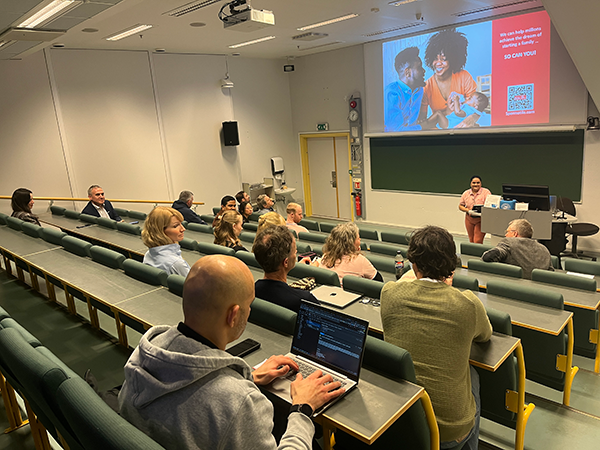
The meeting featured speeches from all the heads of the project:
Krishna Agarwal, Ph.D. Professor, 3D Nanoscopy, UiT, Norway. Her role is to lead the Nanoscopy part and project lead.
Dilip Kumar Prasad, Ph.D. Professor, Bio-AI Lab, UiT, Norway. Serial entrepreneur, Kauffman Fellow. Role: Lead developer AI solution.
Lars Sorensen, MBA. Business Developer, Norinnova, Norway. Experience in med-tech start-up. Role: IP and business development.
Mona Nystad, Ph.D. Head of Fertility Clinic, UNN, Norway. Assisted reproduction technology expert. Role: Sperm analysis and grading.
The energy in the room was palpable as participants affirmed their commitment to making a meaningful difference in the realm of reproductive health. Spermotile represents a critical intervention in an area that has yet to receive the attention it deserves, and the project’s comprehensive approach—encompassing AI, data-driven analytics, and clinical expertise—sets it up for success. By refining sperm selection protocols, the project aspires to improve fertilization outcomes and ultimately ease the emotional and financial strain that can accompany fertility treatments.
In the coming months, the Spermotile team will continue to integrate new findings, refine technical methodologies, and prepare for commercialization. Stay tuned for forthcoming updates as Spermotile moves closer to its goal of transforming fertility care.