
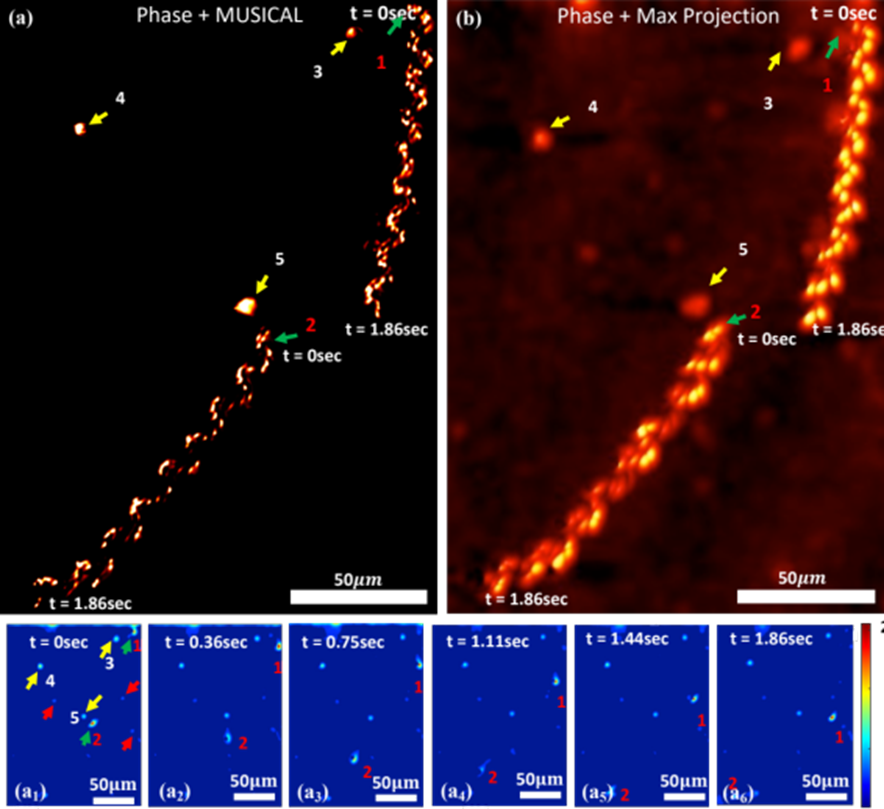
However, conventional sperm analysis techniques, including those employed in Computer Assisted Sperm Analysis (CASA), are limited by their diffraction-limited resolution. While these methods offer valuable insights into sperm motility and morphology, they fall short of providing a complete picture. The lack of ability to capture nanoscale details has prevented the identification of the most suitable sperm cells for ART procedures like intrauterine insemination (IUI), in-vitro fertilization (IVF), and intracytoplasmic sperm injection (ICSI).
The Breakthrough
In a groundbreaking study published in F&S Science, researchers have pioneered a cutting-edge method to analyze sperm motion at a nanoscale level, promising significant advancements in assisted reproductive technologies (ART). This research leverages an innovative combination of Quantitative Phase Imaging (QPI) and a super-resolution computational technique known as MUSICAL (MUltiple SIgnal Classification ALgorithm), referred to collectively as MusiQ. This novel approach enables the detailed tracking of sperm movement, uncovering kinematic features that were previously undetectable.

The ability to differentiate sperm based on nanoscale motion characteristics has the potential to transform sperm selection in ART. This method provides a deeper understanding of sperm motility and in the future will lead to higher success rates in fertility treatments.
Read more in our published article
For those interested in the technical details and the broader implications of this study, the full article is available in F&S Science and can be accessed here: https://doi.org/10.1016/j.xfss.2024.07.002