
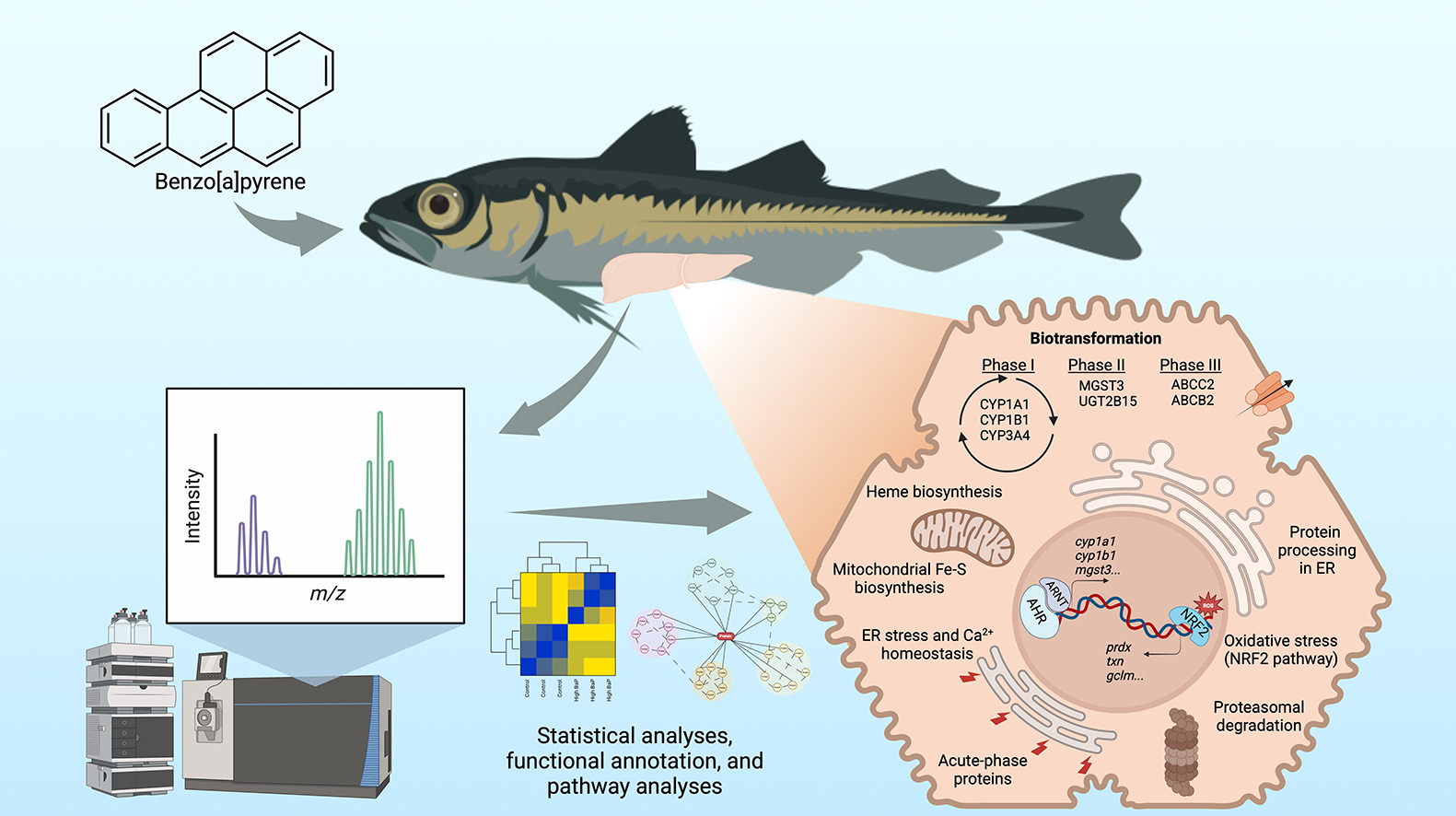
A new study from the project ToxiGen examines how dietary exposure to benzo[a]pyrene (BaP), a toxic PAH, affects the liver proteins of polar cod, a key species in the Arctic food chain. The results show that polar cod respond by activating cellular defense mechanisms related to detoxification, oxidative stress, and inflammation.
These findings align with previous genetic studies, reinforcing concerns that BaP and similar pollutants could harm polar cod's health. While more research is needed, this first proteomic study on polar cod provides key insights into how PAHs affect Arctic marine life at the molecular level.
Read the article in Science of the Total Environment: Quantitative analysis of the polar cod (Boreogadus saida) hepatic proteome highlights interconnected responses in cellular adaptation and defence mechanisms after dietary benzo[a]pyrene exposure
O.A. Karlsen, J.D. Rasinger, M. Brattås, K.E. Tollefsen, A. Goksøyr, J. Nahrgang,
Quantitative analysis of the polar cod (Boreogadus saida) hepatic proteome highlights interconnected responses in cellular adaptation and defence mechanisms after dietary benzo[a]pyrene exposure,
Science of The Total Environment, Volume 963, 2025, 178510, ISSN 0048-9697, https://doi.org/10.1016/j.scitotenv.2025.178510