
index.html
ARRIVAL
Arrival of cellular agriculture - Enabling biotechnology for future food production
Highlights 2024
One key highlight of the ARRIVAL project is its focus on utilizing Norwegian resources and by-products to produce alternative proteins. This is evident in several aspects: The project has processed and characterized five dairy by-products, demonstrating their suitability as a carbon source for milk protein production in Pichia. Residual products are evaluated as nitrogen sources for precision fermentation, and microcarriers and scaffolds for cultured meat.
Another key highlight of the ARRIVAL project has been its strong emphasis on exploring the societal implications of alternative proteins and engaging with the public. This has been demonstrated through several activities:
1) Societal Issue Discussions: The project has conducted world cafés to discuss major societal issues related to cultured meat, such as its political consequences, the relationship with nature, consumer views, and who might be the winners and losers. These discussions have highlighted the project's consideration of the broader impacts of its work.
2) Educational Program Development: ARRIVAL has developed and continues developing an educational program about future proteins aimed at primary schools. This initiative is committed to informing and educating younger generations about new food technologies.
3) Consumer Surveys: The project has conducted two consumer surveys on cultured meat and precision fermentation, revealing a wide range of attitudes from enthusiasm to disgust.
4) Horizon Scanning: We have been mapping trends that might influence the development and policy for cultured meat in Norway through horizon scanning, which involves gathering early signals of development trends. This proactive approach helps identify crucial questions for academic communities, policymakers, the industry, and the public and will end in a policy brief.
Project overview
Project lead: Laura García Calvo (laura.garcia.calvo@nofima.no)
Coordinating institution: Nofima
Partners: SINTEF, RURALIS, Høgskolen i Østfold/Østfold University College, Teknologirådet, TINE SA, Norilia AS, and Nortura AS
Funding: 20 MNOK from The Research Council of Norway
Duration: 2023 - 2027
Research group
Project leader:
Laura García Calvo, Nofima
WP-leaders:
Annette Fagerlund, Nofima
Mona E Pedersen, Nofima
Hanne Haslene-Hox, SINTEF
Erik Thorstensen, Høgskolen i Østfold/Østfold University College
Richard Helliwell, RURALIS
About the project
ARRIVAL aims to enable a wider implementation of alternative animal protein sources in food production chains, as well as preparing society, consumers, and the food industry for the potential impacts of this radical shift in production methods.
The need for alternative animal protein sources
Current estimates predict that global food production must increase more than 60% towards 2050, and as a result there has been an increasing pressure on the livestock sector to meet the growing demand for high-value animal protein. Although plant-based alternative foods have a lot of potential, these cannot truly mimic animal proteins, recreate the nutritional value, nor the mouthfeel, taste, or functionality. Also, from a circular bioeconomy perspective, increased recycling of waste streams from food production will be necessary.
Using Cellular Agriculture in future food production
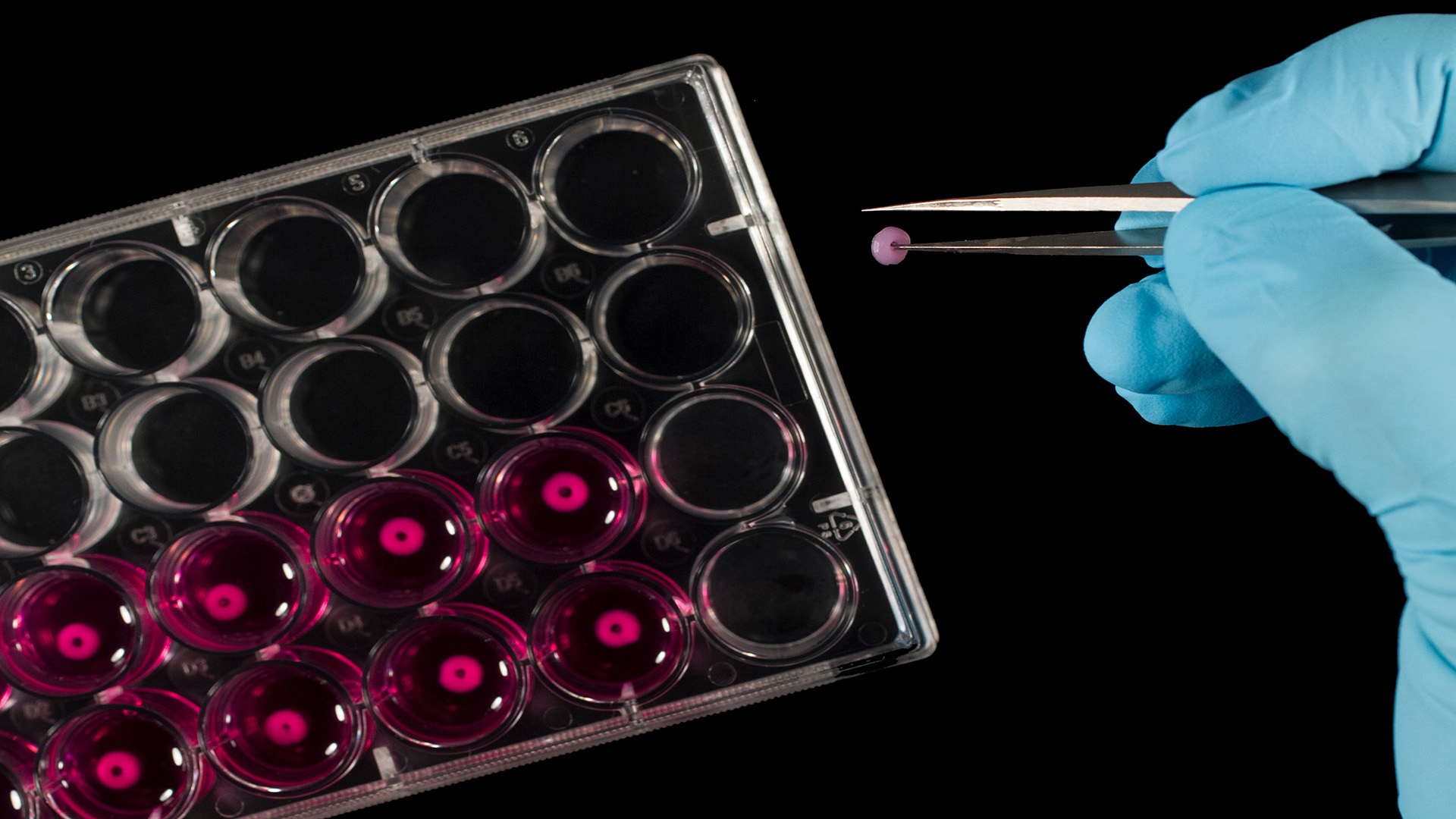
We will employ ground-breaking new, enabling, and fundamentally different technologies to produce food proteins by Cellular Agriculture (CellAg). There are two kinds of CellAg production systems: precision fermentation and cultured meat. ARRIVAL will use both to produce milk, egg, and meat proteins, homologous to proteins normally produced through conventional agriculture, using Norwegian raw materials and by-products as input.
A transdisciplinary approach is necessary
CellAg is a revolution in the way we produce food that can lead to major changes in terms of agricultural production and ownership, land use, policymaking, food habits and not least ethical questions. How do we prepare consumers, society and the food industry for this radical shift?
In addition to investigating the technological changes CellAg might represent, ARRIVAL will, through a transdisciplinary approach, explore the foundations that must be laid before Norwegian consumers and society will and can adopt this technology. ARRIVAL will also explore the ethical and political values that such revolutionary mechanisms may come into conflict with. ARRIVAL will develop enabling biotechnology and knowledge, which will improve and modernize the existing land-based food industry. The novel biotechnological methodology to be developed will in the long term potentially be the foundation of a new kind of Norwegian food industry that will produce tomorrow's food in a smart, sustainable, and innovative way.
Read more
https://nofima.no/pressemelding/norsk-satsing-pa-ny-matteknologi/
https://prosjektbanken.forskningsradet.no/project/FORISS/336136
ARRIVAL – mat fra laboratoriet - Teknologirådet (teknologiradet.no)
Photo: Nofima/Kjell J. Merok