
index.html
XENOSENSE
Developing a cell-free biosensor for toxicity testing, environmental monitoring, and risk assessment
2024 Highlights
In 2024, there have been three main activities ongoing in the Xenosense project.
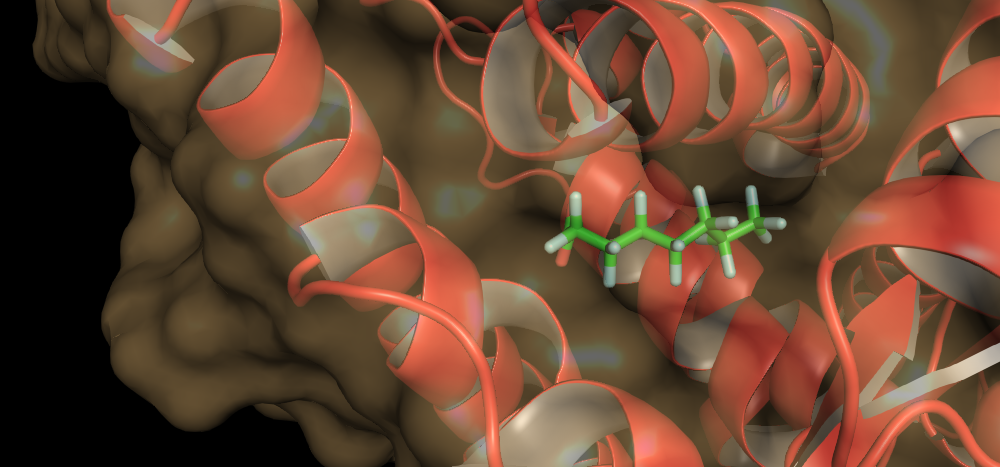
1) Our team in structural biology has focused on establishing a reliable computational tool for understanding and predicting how xenobiotic compounds interact with the ligand-binding pocket of nuclear receptors, in particular with the estrogen receptor from Atlantic cod and human.
2) The biotechnology team has focused on preparing suitable vectors for recombinant production of nuclear receptors in E. coli and developing an efficient purification protocol for these proteins. Furthermore, we have successfully established a sensitive cell free assay for confirming the ability of the purified receptors to recognize and bind to xenobiotic compounds.
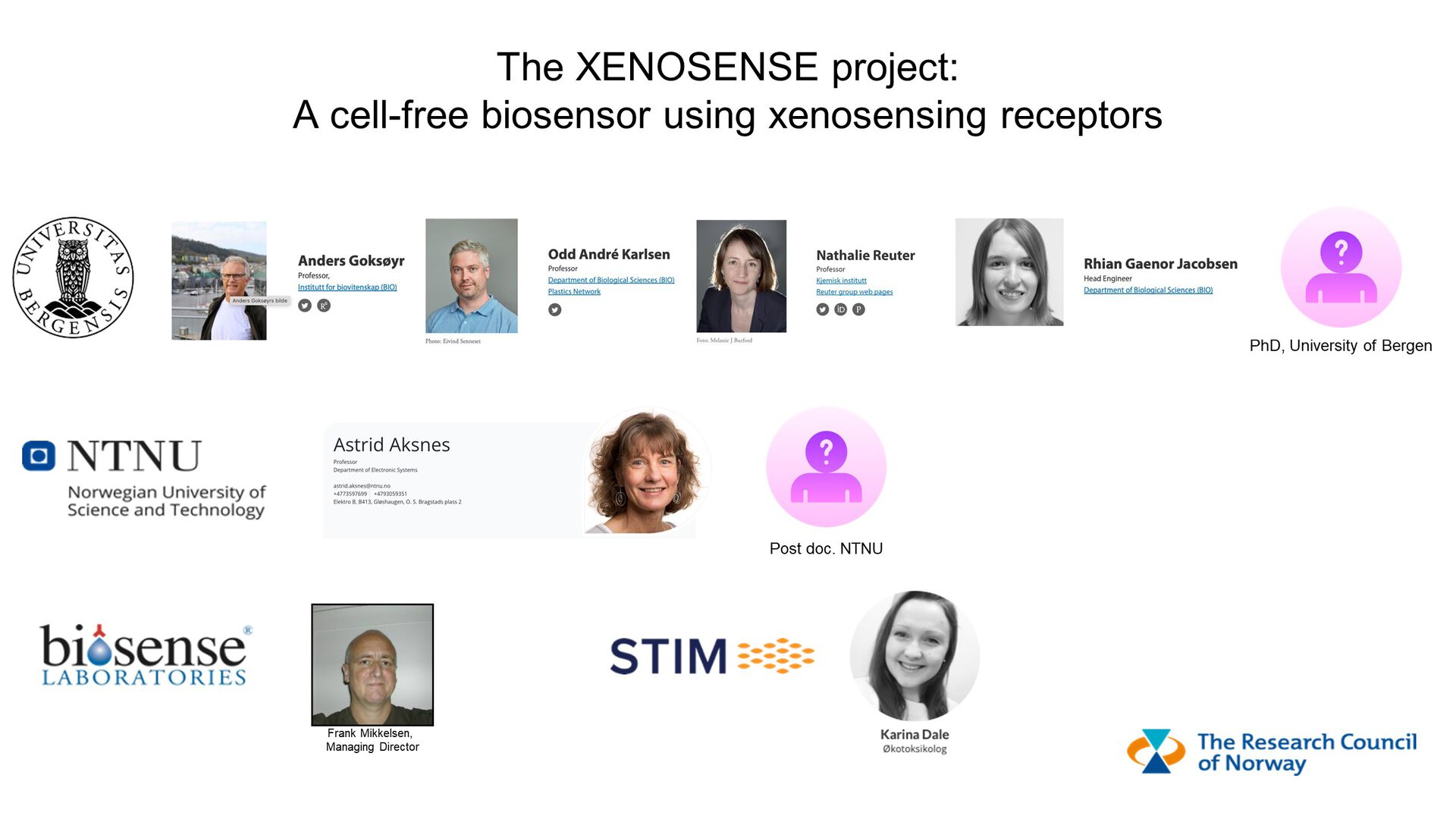
3) Finally, our team on sensor technology has conducted several simulation studies for designing both single channel sensors, as well as multiplexed sensor technology for detection of xenobiotics. As part of the Technology Convergence program funded by the Research Council of Norway, our research team combines competence from various scientific fields, including structural biology, molecular biology, environmental toxicology, and sensor-design. It is highly rewarding to work and collaborate in such a multidisciplinary group of researchers. This also aligns well with being part of the DLN transdisciplinary center, and one highlight during 2024 was our participation at the DLN conference at Hurdalsjøen in October. This meeting provided opportunities to discuss and connect with scientists and students from related fields, establish new collaborations, and obtain new perspectives for embarking complex scientific challenges.
Project overview
Project lead: Odd André Karlsen
Institution: University of Bergen (UiB)
Funding: Research Council of Norway, 15 MNOK
Duration: until November 2026
Publications
About the project
In the XENOSENSE project, competencies in environmental toxicology, biotechnology, nanotechnology, and structural biology will converge to make radical progress towards ecotoxicology and environmental health research, and also towards regulatory toxicology and the 3Rs of animal research (Replacement, Reduction and Refinement).
Production of chemicals set to substantially increase
A recent study suggested that the production and release of novel entities and chemicals has accelerated to a point where we have crossed a “planetary boundary,” threatening both human and environmental health. Around 350,000 different types of chemicals are currently on the international market, with production of existing and new chemicals set to substantially increase in the coming decades.
Solution: developing a xenosensing biosensor
The ultimate goal of 3R research has been the full replacement of animal testing with alternative methods. Yet, we are still far away from reaching this goal, and our capacity to evaluate the risk of new and existing chemicals lags far behind the need. The core concept of the XENOSENSE project is to develop a transformative method to taking toxicity testing towards not only animal-free, but also cell-free, testing methods, building on the ethical imperative of the 3R principles, by building on the convergence of environmental toxicology, computational biology, biotechnology and nanotechnology, and using collaborative research and co-design with relevant industrial partners directly integrated in the project to develop a versatile Lab-on-a-Chip-based xenosensing biosensor.