BEDPAN
BEDPAN 2.0
Developing an environmentally friendly, low-cost method for making metallic nanoparticles.
Highlights 2024
2024 saw a major shift in the project. The original, RCN-funded Digital Life project was wrapped up early in the year, with final reporting. Since May 2024, a new project is funded by NovoNordisk Fonden, and allows us to continue seamlessly with our research. We applied to continue our participation with the Digital Life Norway, as this gives us access to resources and expertise for innovation and commercialization activities in the future.
Project overview
Project lead: Dirk Linke
Institution: University of Oslo
Funding: Novo nordisk fonden. 3.000.000 DKK
Duration: 01.05.2024 - 30.04.2027
Publications
Research group

Production of metallic nanoparticles sustainably
Metallic nanoparticles are used in medicines, electronics, energy cells, and chemical catalysis. They are typically produced using conventional chemical and physical methods that rely on chemical solvents and reducing agents. These methods are often criticized for being energy-intensive, inefficient, and generating substantial amounts of hazardous waste. In contrast, biologically mediated nanoparticle synthesis presents an eco-friendly and sustainable alternative for producing metal nanoparticles.
Using genetically engineered bacterial cells
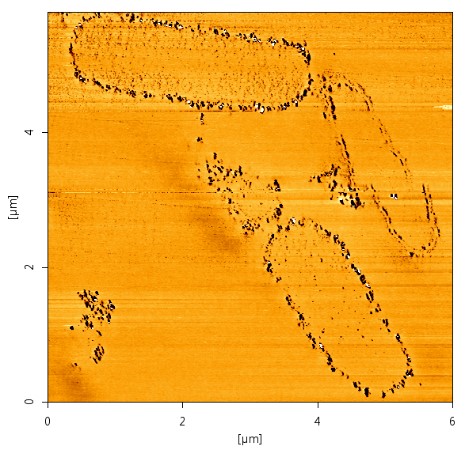
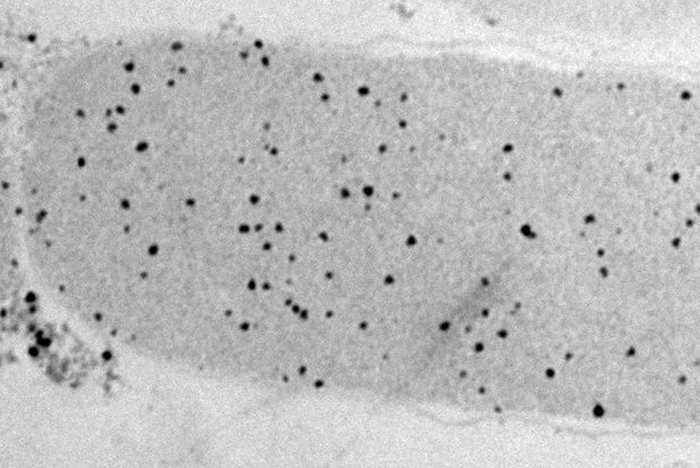
Microorganisms, particularly bacteria, can produce a variety of metallic nanoparticles, including those of palladium, gold, silver, platinum, copper, selenium, and titanium. We aim to develop a toolkit for the systematic, bio-based industrial production of metallic nanoparticles from noble metals, with a focus on palladium (Pd) and palladium-based nanoparticles. This production system utilizes genetically engineered bacterial cells to produce catalytically active nanoparticles with well-defined physicochemical properties, integrating methodologies and concepts from both biotechnology and nanotechnology.
This bacteria-based technology has the potential to offer a novel, environmentally friendly approach that aligns with the UN sustainability goals.
Based on an understanding of bacterial processes
The scientific foundation of our genetically engineered production strains lies in a comprehensive understanding of bacterial processes, specifically:
- metal transport processes in bacteria, and the application of these processes to non-natural metal ions such as Pd2+, and
- bacterial metal reduction processes that facilitate the formation of metal nanoparticles from imported metal ions.
A toolkit of bacterial strains to produce catalyst materials
The nanoparticles will be compared to commercially available nanoparticles, evaluating their effectiveness as catalytic materials for selected chemical reactions. Preliminary data indicate that we can adjust parameters such as particle size, shape, and catalytic and magnetic properties by modifying metal transport and reduction genes and pathways. Through systematic modifications of these pathways in an iterative and reflexive R&D pipeline that includes industry feedback, we aim to develop a comprehensive toolkit of genetically engineered bacterial strains capable of producing catalyst materials with tailored properties.
Latest news from the project
-
Bacterial Nanoparticle Synthesis: Research Visit to Regensburg Mar. 25, 2025 1:18 PM
-
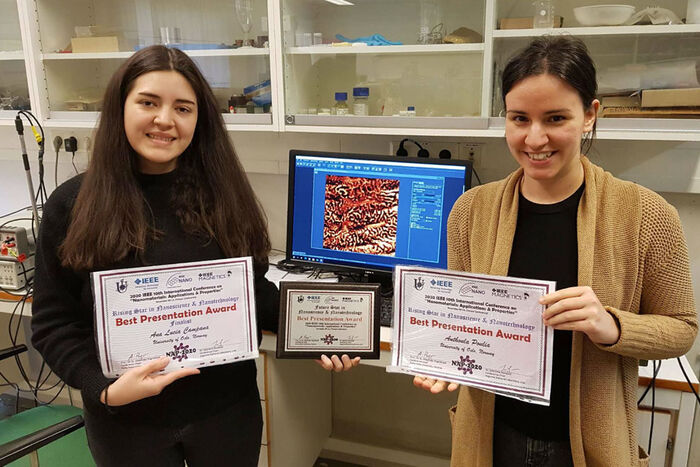
Success on International 2021 IEEE conference Oct. 30, 2021 10:22 AM
-
Extensive and innovative master's thesis June 21, 2021 11:19 AM
-
Strong performance at international conference on nanomaterials Nov. 24, 2020 9:35 AM
-
Innovation for future biotech Oct. 25, 2018 8:55 AM