Summary of Centre for Digital Life Norway from 2024.
Comment from the centre director
Dear Digital Life friends,
It is a privilege to once again present the Digital Life Norway (DLN) annual report—our ninth. As I write this, we are in the final year of the Centre period. It is a time for reflection while still moving full steam ahead in 2025. Over these nine years, we’ve focused on national collaboration, training young researchers, shaping Norwegian biotechnology research and policy, promoting inter- and transdisciplinarity, and building networks across fields, projects, institutions, and sectors—always ensuring biotechnology is placed in a societal and ethical context.
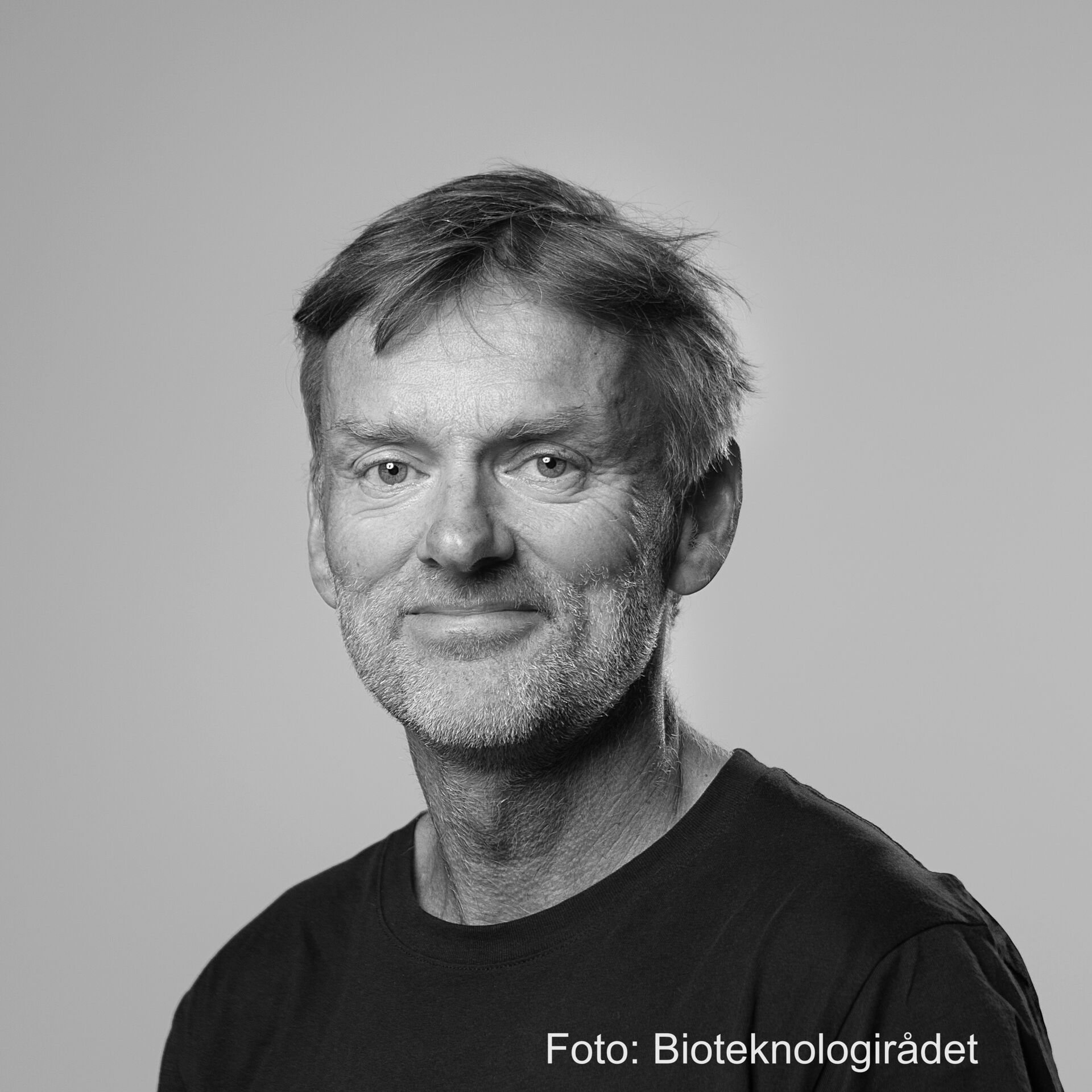
Trygve Brautaset
Scientific director DLN 2.0
Read the full article
It is a privilege to once again present the Digital Life Norway (DLN) annual report—our ninth. As I write this, we are in the final year of the Centre period. It is a time for reflection while still moving full steam ahead in 2025. Over these nine years, we’ve focused on national collaboration, training young researchers, shaping Norwegian biotechnology research and policy, promoting inter- and transdisciplinarity, and building networks across fields, projects, institutions, and sectors—always ensuring biotechnology is placed in a societal and ethical context.
National collaboration has always been a core priority of DLN. Several new research projects joined the Centre in 2024, with groups spanning different regions and institutions in Norway. Now, DLN has more than 50 partner projects. Our competence hub works closely with them as a catalyst to achieve the Centre’s mandate. Our Data & Models team at UiB collaborates with national research libraries, and our inherently national DLN Research School expands its reach through events across Norway. In April 2024 a Mini MBA was organized by our innovation team and Research School, which sparked new collaborations now supported by The Forge—Norway’s first national biotech accelerator, developed with Oslo-based Aleap.
Training the next generation of biotechnology researchers and leaders is a high priority. Our Research School—the largest in Norway—hosts over 600 alumni and 500 active PhD candidates and postdocs from across institutions. In 2024, we arranged 33 events focusing on key skills for early-career researchers. The annual Digital Life conference highlighted “AI + biotechnology,” showing how the field is moving in more multi- and transdisciplinary directions. A flagship initiative is our PhD industry internship programme, now in its fifth year, offering real-world experience beyond academia and impact at host companies.
DLN has also contributed actively to shaping Norwegian research policy. In 2024, the DLN board submitted joint recommendations to Parliament and responded to public hearings such as the Norwegian Official Report (NOU) “Med lov skal data deles.” We shared insights on the research system through the lens of digital transformation, focusing on the need for better digital skills and infrastructure. We highlighted the barriers created by data silos, and in the NOU context, addressed ethical and systemic challenges of data sharing. We also held two impactful policy workshops—one in Kringler in March on “transformation in science,” and our September Walkshop exploring “the different values of science,” both attracting national and international participants.
A lasting impression we hope to leave is the value of the networks we’ve helped build—not only among researchers but also across industry, government, and higher education. We facilitated cross-project workshops, supported collaboration with TTOs, and helped ignite innovation from within our project portfolio.
Now, back to 2025. In April, we will host a Digital Life Legacy Workshop to reflect on this ten-year experiment in organizing biotechnology research in Norway. We look forward to collecting insights and sharing them with you later this year.
Trygve Brautaset
Scientific director DLN 2.0
Comment from the board chairperson
Digital Life Norway, as highlighted in its 9th annual report, has firmly established itself as a dynamic hub of interdisciplinary activity, offering vital training and support for researchers looking to bridge gaps across various fields and sectors. The organization’s seamless operation is owed to an exceptional management team and the active engagement of the scientific community, with significant contributions from younger researchers.

Finn-Eirik Johansen
Board chairperson
Read the full article
Digital Life Norway, as highlighted in its 9th annual report, has firmly established itself as a dynamic hub of interdisciplinary activity, offering vital training and support for researchers looking to bridge gaps across various fields and sectors. The organization’s seamless operation is owed to an exceptional management team and the active engagement of the scientific community, with significant contributions from younger researchers.
As we approach the final year of operation, the board faces a crossroads regarding the future. On one hand, there remains a pressing need to cultivate a mindset and practices within Norway’s academic biotech sector that prioritize national cooperation and societal value creation. On the other hand, DLN stands as a project jointly funded by the Research Council of Norway (RCN) and Norwegian institutions, and no project should extend indefinitely. Throughout its nine-year journey, DLN has maintained close ties with the RCN, influencing the shaping of calls—particularly those that bolster DLN's priorities such as Responsible Research and Innovation (RRI) and innovation. However, the board has received confirmation that RCN will not be providing further targeted calls to support DLN activities beyond 2026. Despite recognizing the significant value of the national network DLN provides, current financial constraints in our sector necessitate tough decisions. Without substantial external support, a DLN3.0 iteration is not feasible. Therefore, our focus remains on maximizing the efficiency and impact of DLN2.0 until its conclusion, ensuring that the insights gained are widely shared.
One of DLN's objectives has been to boost Norway's competitiveness in the biotechnology industry. This sector's potential is illustrated by the remarkable growth of the Danish company Novo Nordisk, largely thanks to the success of their Glucagon-like peptide-1 (GLP-1) analogs for treating diabetes and obesity. In a broader context, the Draghi report on European competitiveness underscores the need for substantial investments in research and innovation across pivotal technologies such as AI, robotics, and biotechnology. This call to action aligns with DLN’s mission, emphasizing the necessity for continued support and strategic focus as we navigate the complexities of our evolving technological landscape.
Finn-Eirik Johansen
Board chairperson

The Centre for Digital Life Norway transforms Norwegian biotechnology research and education to increase innovation and value creation for society. The Centre has research projects all over the country. Transdisciplinary collaboration is our trademark.
Centre highlights
DLN 2.0 includes seven partner institutions and a strong competence hub centered around an Operational Management Team (OMT), an Expert Task Force (ETF) and a Junior Resource Group (JRG). The seven partner institutions are NTNU, UiO, UiB, UiT, NMBU, SINTEF, OUS.
- COLLABORATION ACROSS DISCIPLINES AND PROJECTS
- INNOVATION AND INDUSTRY COLLABORATION
- DATA MANAGEMENT
- RESPONSIBLE RESEARCH AND INNOVATION (RRI)
- TRAINING AND CAREER DEVELOPMENT
- DIGITAL LIFE NORWAY RESEARCH SCHOOL
- COMMUNICATION AND THE DIGITAL LIFE NORWAY COMMUNITY
Collaboration across disciplines and projects
The possibility of harvesting synergies between projects and competence exchange is one of the benefits of being part of the Centre for Digital Life Norway. We encourage projects in the centre to collaborate across disciplines and projects.
Funded cross-project activities
The cross-project activity call is an incentive that several of our projects are utilizing to expand collaboration between the projects at different institutions and across different research fields. In the 2024 call, we funded two cross-project activities:
- A pilot project between nanoRIP and nanoAI on generating microscopy and nanoscopy synthetic data
- A pilot project between nanoRIP and nanoAI on creating a new research model
Successful cross-project workshop
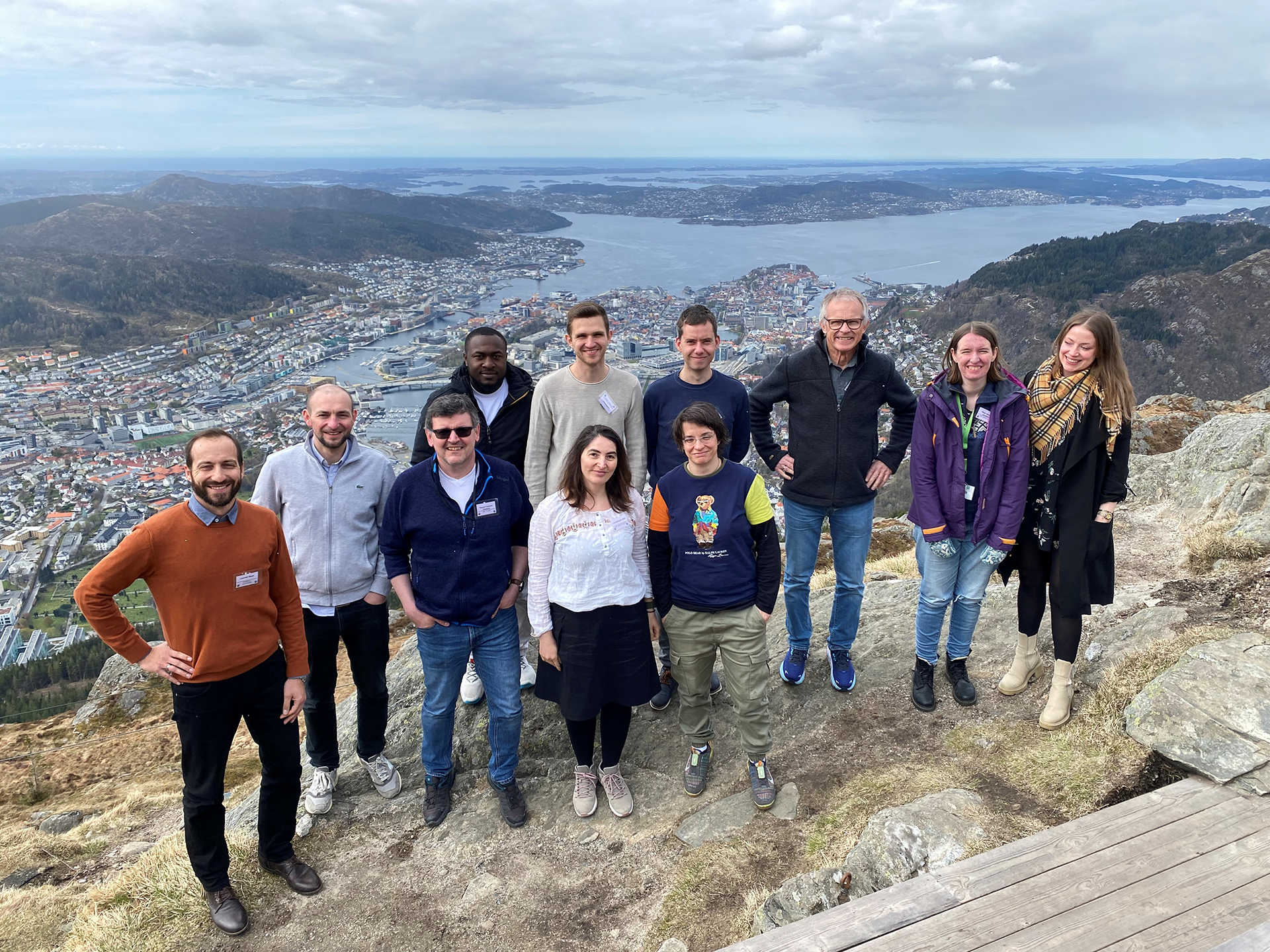
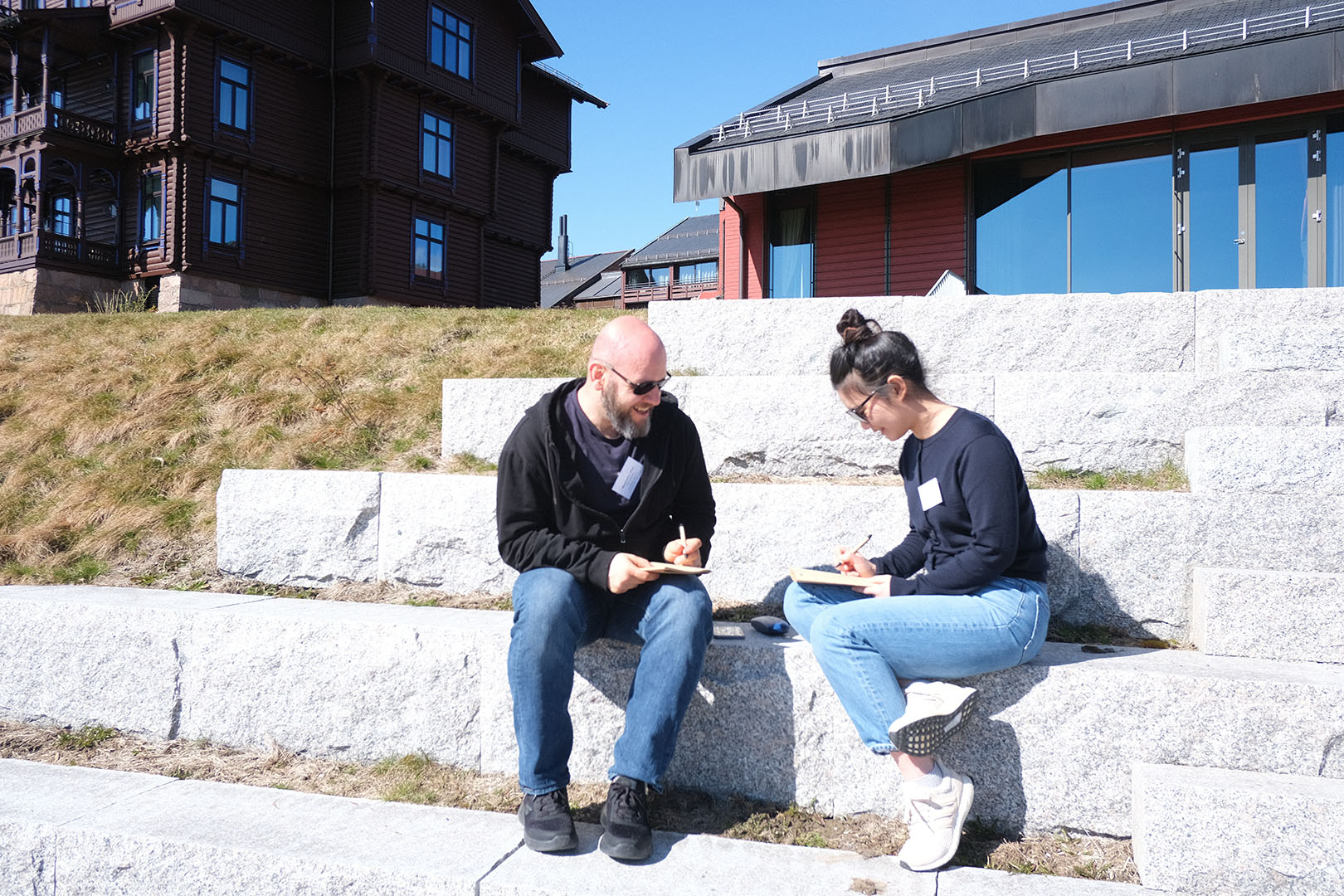
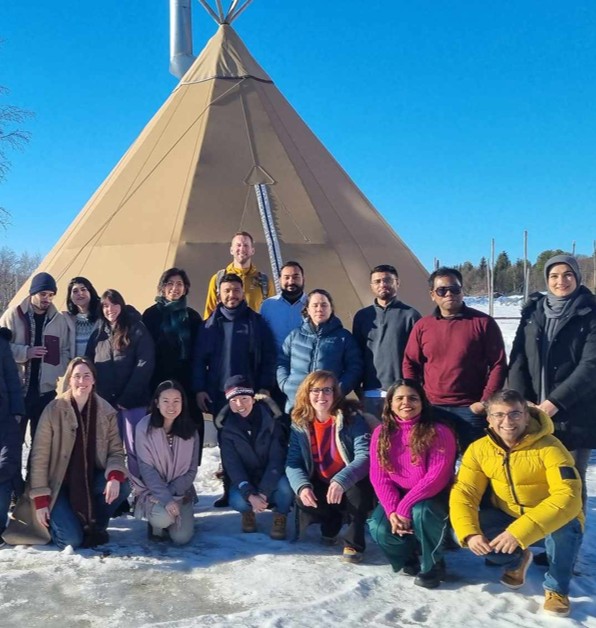
In 2024, CCBIO and Marma-detox organized a successful collaborative iPSC workshop with 2023 cross-project funds. We see that the DLN cross-project initiative provides an opportunity for closer collaboration between projects within DLN (pictured).
Innovation and industry collaboration
The DLN centre competence area for innovation supports research projects to drive innovation that responds to society’s grand challenges.
A roadmap for academic research-intensive innovation
Since 2019, Digital Life Norway (DLN) has led the pioneering initiative "A Roadmap for Academic Research-Intensive Innovation," a 30M NOK project financed by the Research Council of Norway (RCN). The objective of this ambitious project is to design and implement systemic changes in the Norwegian innovation ecosystem, with the aim of accelerating innovation from academic research within the transdisciplinary field of digital biotechnology. The roadmap not only identifies key barriers to academic innovation but also tests practical interventions to enhance the translation of research into societal and economic value.
In 2024, the roadmap team welcomed two new Senior Advisors: Birte Hansen, who holds a joint appointment with dScience, and Rosalie Zwiggelaar, covering parental leave. In addition, RCN agreed to extend the project until the end of 2026 to ensure that the team have time to complete and monitor the impact of all the remaining pilots and to produce an impactful strategy.
More information on Innovation Roadmap
Roadmap activities in 2024
Throughout 2024, Digital Life Norway continued to advance its innovation agenda through the completion of several key pilots and the launch of new initiatives. These activities reflect our commitment to fostering an innovation culture within the academic community and strengthening ties between academia and industry.
Completed pilots
1. The Academic Business Developer Awards
As detailed in the 2023 Annual Report, these pilots provided academic researchers with business development support and salary, thus enabling them to explore the commercial potential of their research. The pilots were completed in 2024 and their impact was measured and recorded in their final reports.
2. The DLN Mini MBA
32 researchers participated in an intensive 5-day program to impart practical skills in entrepreneurship, intellectual property management, and business strategy. The programme received excellent feedback. Many of teams continue to develop their ideas and several have received funding and other innovation support. More details on the program.
3. Review of Innovation Opportunities
A comprehensive review of innovation opportunities within the DLN project portfolio was conducted in 2024. The review not only mapped current commercialisation efforts identified high-potential projects for use in further innovation pilots such as the Proof of Principle Awards (below).
New pilots initiated in 2024
1. Proof of Principle Awards
To address the well documented funding gap in pre-commercial R&D funding, the team awarded up to 2M NOK to 3 projects (BrainVector, NadTx and MeatGuard) from the DLN project portfolio. The funding was targeted at research that is difficult to support to existing mechanisms and that had the potential to measurably increase innovation within 12 months.
2. Value Your Data
Recognising the critical role of data in modern biotechnology, DLN launched the "Value Your Data" pilot to quantify the impact of commercial data services on academic innovation and provide insights on how to leverage data assets within academic environments.
3. Innovation Mentoring
To bridge the gap between academic research and industry application, DLN introduced an Innovation Mentoring pilot. This program connects early-career researchers with experienced industry professionals to provide guidance on innovation strategies, business development, and market positioning.
4. Industry Internships for Postdocs
In 2024, DLN also launched an industry internship program designed for postdoctoral researchers. This initiative provides postdocs with hands-on experience in industrial settings, enhancing their understanding of commercial R&D processes and fostering stronger academic-industry collaboration.
5. A National Biotechnology Accelerator
Preparation was started for The Forge accelerator. This 6-month training programme will take University teams from concept to commercialisation using leading trainers from Norway and internationally. It will be Norway’s first national biotech accelerator.
6. Building Stronger Connections:
To foster international innovation collaboration, the innovation team visited key players in Copenhagen's biotech sector. As a center for biotech innovation, these meetings provided invaluable opportunities to understand emerging trends, cultivate relationships and acquire crucial insights that will shape DLN’s future innovation strategies.
RRI in Innovation Roadmap
RRI-specific pilots were supported from IR in previous years, namely the 'transdisciplinary workshops' and 'not-for-profit business models' pilots. No further RRI-specific pilots were conducted in 2024. However, RRI was integrated into all the pilots described above through discussion with the RRI experts in the DLN Operational Management Team (OMT).
The IR project, as a whole, has been designed to create arenas for the discussion of questions concerning 'responsibility' and how R&I can be societally relevant, desirable, and acceptable. As such arenas have been limited in the existing innovation infrastructure within Norwegian biotechnology, responsible innovation has been an integral part of the activities conducted within this project. Thus, the RRI focus of DLN is embedded within the pilots, for example:
1. The “Value Your Data” pilot that is addressing a fundamental limitation of existing research within the life sciences: to support open science. It is aimed at exploring how data generated by research projects can be maximally exploited for purposes other than the original context within which this data has been generated.
2. The Mini MBA and industry internships represent venues that have been created by the IR and are aimed at up-skilling early career researchers and increasing their awareness about the societal relevance of their research.
Challenges and progress
In 2024 the Innovation Roadmap project again faced challenges due to staff turnover. Despite the setbacks, the project progress continued through internal resource adjustments and support to the innovation team from other parts of DLN, and with a lot of support and flexibility granted from dScience at University of Oslo, we were able to mitigate the impact of the capacity loss. New pilots were thus able to be prepared, launched, and completed within reasonable time frames. Due to these and earlier staffing challenges, as well as the impact of the COVID-19 pandemic and the delayed deliveries of the AS IS and TO BE reports, the Innovation Roadmap project was granted an extension of the project to continue into 2026 from NFR.
Looking ahead
2025 and 2026 will be an exciting time for the innovation activities in DLN. A final set of pilots will be completed and evaluated alongside all those completed over the rest of the project. Together with the As Is and To Be reports, data form all the pilots as well as national and international innovation data will be used as the basis for draft recommendation, strategic consultations and finally the Innovation Roadmap report.
Data management
As in previous years, The Data & Models competence area of the Centre for Digital Life Norway (DLN) focused on building competencies, developing infrastructure and engaging in policy work. These three pillars have helped to further advance DLN's mission to promote responsible and sustainable use of data in life sciences research.
Policy engagement
In 2024 the Centre for Digital Life (DLN) has provided input on two governmental consultations.
On the “Work on a report to the Storting on the research system” DLN provided its insights regarding the research system amidst significant digital transformation, particularly focusing on the need for enhanced digital competencies and infrastructure in higher education and research. DLN highlighted the challenges of existing data silos, which hinder innovative research and collaboration across disciplines. The Centre called for a systematic convergence of data management and interdisciplinary approaches to enable better utilization of extensive datasets, recognizing data as a primary research output. The Centre emphasized the necessity of establishing roles such as Data Stewards to facilitate the implementation of data strategies and promote cross-disciplinary collaboration. Additionally, DLN insisted that knowledge transfer must become more inclusive and responsive to societal needs, advocating for open access and innovation within research policies. The call for improved infrastructure and clear roles in data sharing is paramount to advance Norway's biotechnology and health data use, which remains underutilized due to slow access mechanisms. DLN further stressed the importance of cross-sectoral coordination to address complex societal challenges, recommending the establishment of adaptable learnings platforms and collaborative spaces that foster transdisciplinary research. These efforts aim to strengthen the connections between research institutions and enhance the overall effectiveness of Norway’s research and innovation landscape.
On the "NOU 2024:14 Med lov skal data deles” DLN raised concerns about insufficient emphasis on social responsibility and preparedness, particularly regarding private-public partnerships. The response highlighted the need for adequate funding and expertise across research institutions to effectively implement the proposed legislation, noting that the existing financial models did not adequately promote the standardization and accessibility of reusable research data.
DLN identified systemic challenges related to data sharing, such as ethical considerations and the potential misuse of research data when linked to different datasets. It underscored the importance of establishing ethical committees within Norwegian institutions to guide researchers on ethical practices in data reuse. Furthermore, the response recommended conducting risk assessments and impact analyses to understand the societal consequences of increased data sharing. To ensure the effective implementation of the new law, DLN advocated for the inclusion of systematic analyses, stakeholder involvement, and clear ethical guidelines in the legislative text to foster responsible innovation and address the complexities of data sharing.
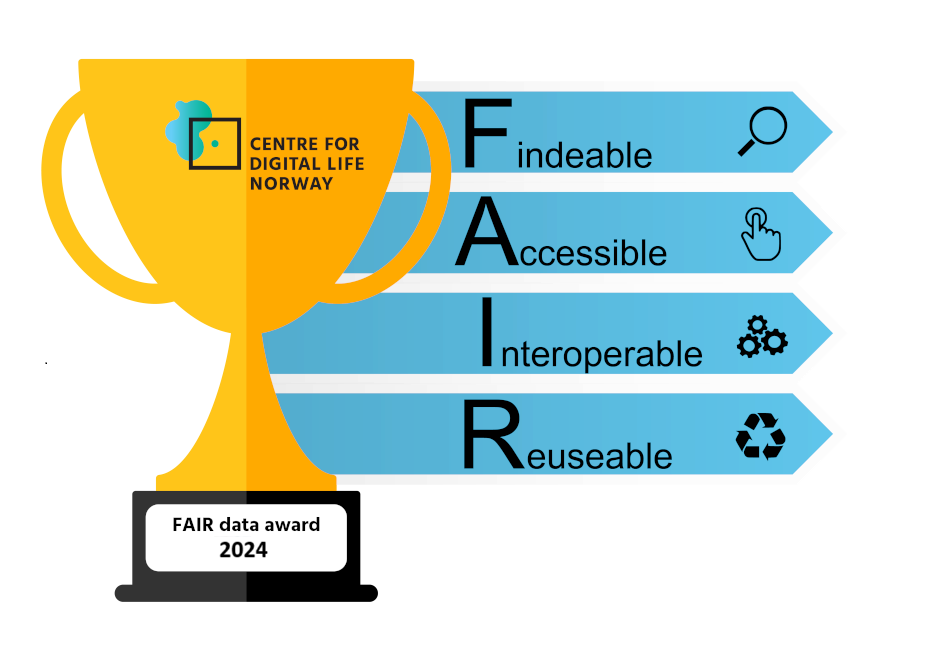
FAIR Data Award 2024
Also, this year DLN will reward the effort of providing scientific data in as FAIR a way possible. As the fourth award of its kind, we received much positive feedback on the lighthouse effect of recognizing research outputs beyond classical journal publication.
This year’s deadline for applications end 31st of March, 2025.
In 2024, we awarded the 2023 FAIR Data Award to Ingrid Reiten and Camilla Blixhavn.
Read more about the award here
Competence workshops
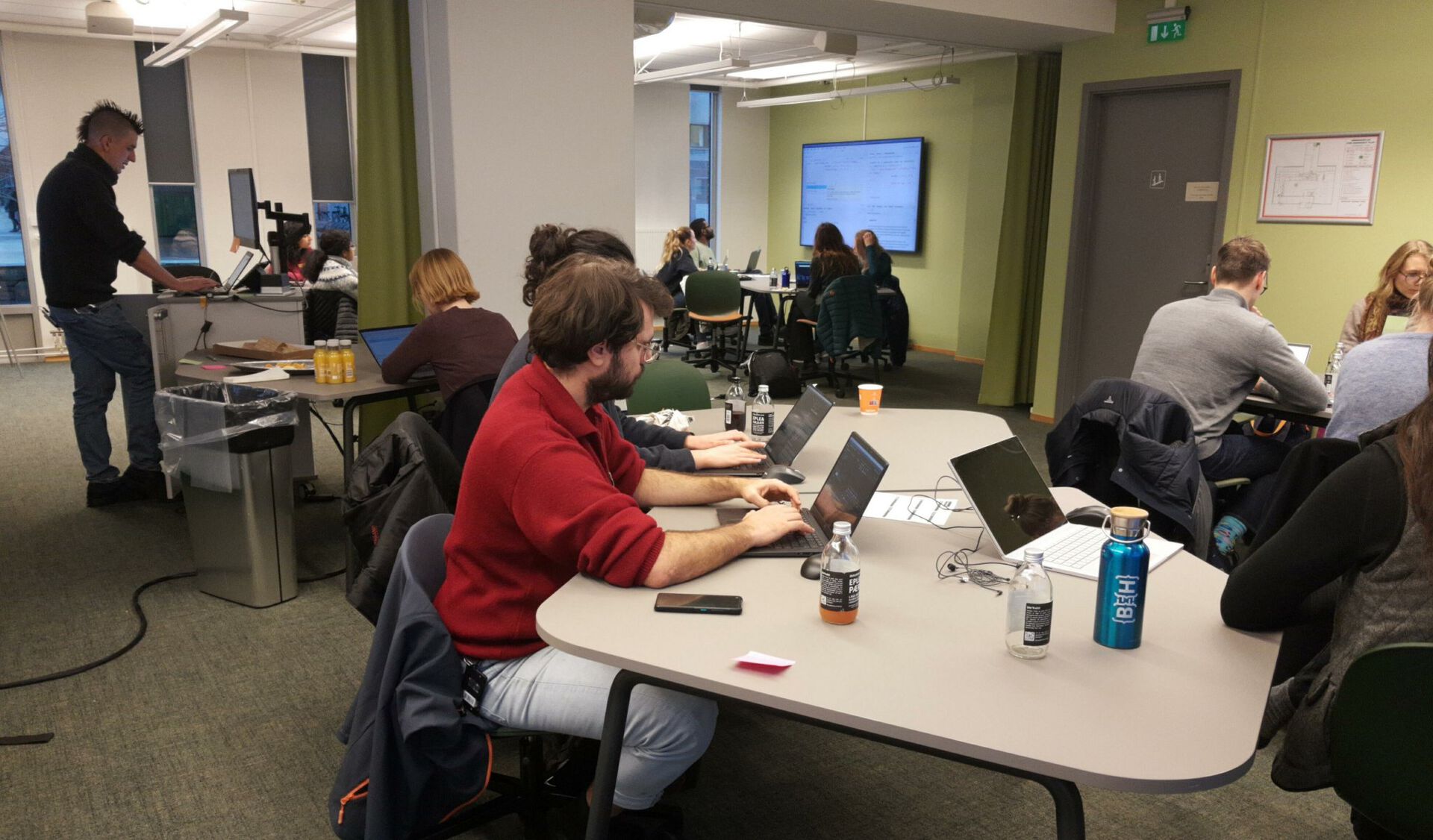
DLN held two in-person software carpentry workshops in Bergen together with ELIXIR Norway, NRIS, NORBIS, and the UiB library Digital Lab. These workshops aimed to provide attendees with hands-on training in open-source software development and data visualization, thereby improving their competencies in these areas. In addition, DLN organized a data management planning workshop.
Also, this year the Data & Models team has submitted an application for a research school to professionalize the education of Data Stewards through a post-graduate certification.
Infrastructure development
DLN has enabled further development of the use of Norwegian e-infrastructure for Life Sciences through the SEEK platform and supported the national research-data.no knowledge resource development.
Furthermore, the Data & Models team is part of the newly funded FAIRMD EOSC OSCARS project which aims to improve handling of experimental and computational data about disordered molecules.
Data management events
Below is a list of DLN Data management events in 2024:
- Webinar: Navigating Licensing in Bioinformatics: Software and Data Perspectives
- Software Carpentry course in research computing skills: Shell, R or Python for reproducible analysis, Git
- FAIRDOM User Meeting
- Life Science Data Management: Planning workshop
- Software Carpentry course in research computing skills
Responsible research and innovation (RRI)
Keeping with tradition, in 2024, the RRI team’s activities were centred on engaging with actors across the Norwegian biotechnology sector.
Impact call
In late 2023, we launched the Impact Funding call to encourage early-career researchers to think beyond academia and engage with society. The challenge was to design activities connecting their research with external stakeholders. The goal is to help researchers step out of traditional academic routines, the ivory tower, and out of their comfort zones. Moreover, the goal is to support researchers in thinking and acting independently on significant, yet less considered, ways through which they can enrich their research. To this end, we picked two winners from the proposals we received. Read more about their respective activities.
We are pleased to report that the call has proven to be a success. Viviam, a PhD researcher at NTNU, focuses on computational modeling in precision medicine. She created the SPARK card game (Sharing Perspectives And Reinforcing Knowledge) and refines it iteratively based on feedback from diverse stakeholders. Players share their insights, helping the game evolve to incorporate multiple perspectives. So far, it has been played three times, receiving positive feedback. Viviam plans to continue developing and expanding the game through 2025, reaching new audiences. You can read more about it in the summary of the DLN 2024 conference.
Komal, who is researching ultrasound, microwaves and optics at UiT, has kicked off her project Farm-a-see. Arctic farmers face unique challenges, and technology can help. Her project is to bring together experts from the fish industry to understand farmers' needs and explore innovative solutions to cater to these needs. The goal of her activity is to make Arctic farming more efficient, productive, and sustainable through technology. Through the course of the year, Komal and her team have cultivated this project which has not been without its own unexpected challenges. Read more about her journey.
Policy forum, Kringler: March 2024
In March 2024, the RRI team and ETF member Roger Strand hosted a research policy seminar at Kringler Gjestegård, bringing together experts from various sectors under the Chatham House Rule. The seminar served as both a learning activity for DLN and an opportunity to share insights with key actors in Norwegian academia, administration, and public discourse. This seminar was developed as a natural continuation of the policy forums hosted DLN in recent years. Discussions focused on institutional anchoring of research policies, sustainability, and preparedness. Participants emphasized the need for research institutions to integrate values such as respect and care for nature into their practices, while addressing systemic challenges like the gap between policy goals and institutional realities.
The seminar also explored how biotechnology can contribute to societal resilience in times of crisis, drawing lessons from the COVID-19 pandemic. Participants highlighted the importance of building institutional memory to preserve knowledge and foster long-term preparedness. The event underscored DLN's role as a learning arena and its commitment to promoting transformative change in research practices. Insights from this forum will inform DLN’s ongoing efforts to align research with societal needs and values.
Walkshop: August/Sept 2024
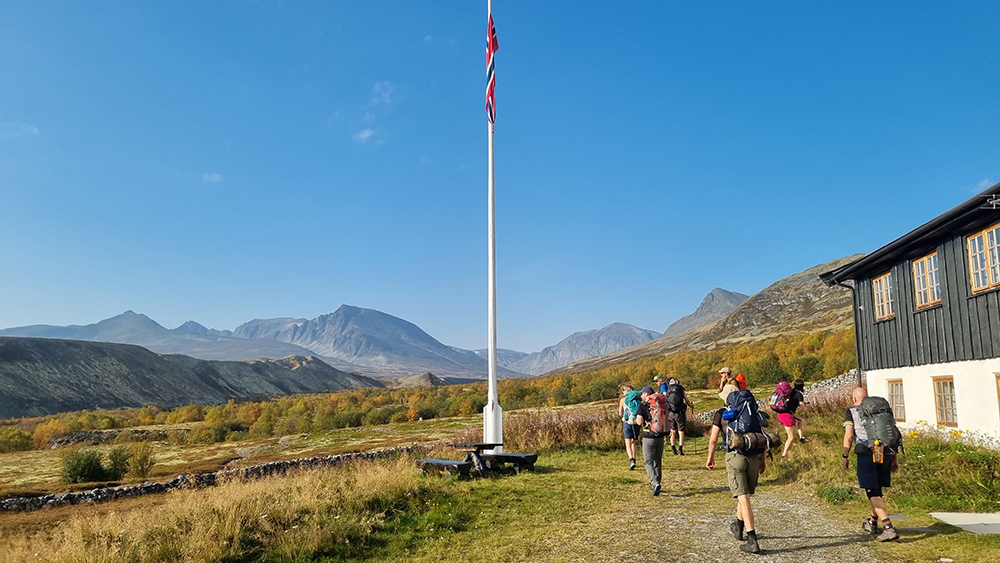
In late summer 2024, DLN organized a unique "Walkshop" in Rondane National Park, in collaboration with NTNU Health and Life Science. Over four days and 50 kilometers of hiking, participants engaged in deep discussions about humanity’s relationship with nature and biotechnology’s role in addressing global challenges such as biodiversity loss, pollution, and climate change. The walkshop provided a rare opportunity for prolonged reflection away from typical academic settings, fostering meaningful conversations among researchers from Norwegian universities, European institutions, and the Research Council of Norway.
Each day began with thematic keynotes or guiding questions, which evolved into rich discussions during the hikes. Evening plenary sessions at DNT cabins consolidated insights. Topics included ecological ethics, sustainability in biotechnology, and how perceptions of nature shape innovation practices. Participants reported enhanced discussion quality due to the immersive format, with some noting transformative realizations about integrating experiential perspectives into teaching sustainability and RRI.
The walkshop demonstrated the value of engaging with nature as a "silent stakeholder" and offered new ways to frame challenges in biotechnology research. Insights gained will guide DLN’s future initiatives aimed at fostering holistic and ethically grounded approaches to innovation.
Train-the-trainer workshop: 24th Sept to 25th Sept
While we continue our efforts in training early career researchers, this year we also took the chance to train ourselves in tools useful to induce the transformation of the Norwegian biotechnology community.
The train-the-trainer workshop was held over two days and involved the participation of trainers, as well as students studying biomedicine. The first day focused on the trainers which included experts from philosophy of science and science and technology studies (STS) who have extensive experience working across scientific disciplines, particularly in medicine, biotechnology, and other life sciences. Roger Strand (adjunct professor at the NTNU and in that capacity a member of the expert task force at DLN) taught the ‘trainers’ the value and relevance of inducing reflection within members of the Norwegian biotechnology community. We also exchanged knowledge and experiences about dislocatory moments we, as trainers, have had, as well as those we have observed in those we engage with.
On the second day, the trainers had the opportunity to test their learnings with a group of master students studying biomedicine. While processes of epistemological catharsis and subsequent metamorphosis may be both slow and difficult to observe, it is safe to say that already during that second day, several dislocatory moments were experienced, both by the trainers and by the students.
RRI-Web series: Experiences from early career RRI researchers in DLN
In 2024, DLN also embarked on the mission to explicate and capture the experiences of persons who have worked with and represented the subject of RRI in DLN projects. As you may know, DLN is an experiment with a special focus on inducing reflection amongst those working in the biotechnology sector as to the societal context within which such research is typically embedded. A number of DLN projects have been involved with and worked towards creating spaces for such reflections within the research team and beyond. With this in mind, we reached out to researchers who have worn the RRI hat while being a part of research teams. Or as we are (in)famously known as,'the RRI people'.
The series has now seen contributions from four such researchers who have shared their experiences of working in deep interdisciplinary settings. Vincenzo Politi has written about his role as an ‘embedded philosopher’ in the DLN project: PINpOINT based at UiO. Olga Mikhailova from NMBU has shared her insights on her role in the EcoGene project, particularly from a workshop organised to dig deeper in the societal impact of the project. Alexander Myklebust from NTNU discussed the distinct approach of the ‘Socratic dialogue’ they developed through their work with the OXYMOD project. Finally, Ane Møller Gabrielsen, also from NTNU, shared her reflections on the challengs of an RRI role in a complext interdisciplinary collaboration within a DrugLogics associated project: Crossover Research 2.0. The series will continue in 2025 with contributions from other RRI researchers from the DLN community.
Engagement with AFINO
In 2024, we continued our valuable collaboration with the AFINO project. The project came to a close at the end of 2024 but not before their last annual international conference and the annual AFINO autumn research school. The conference focused on the theme of ‘transformative research and innovation’. Under this theme, DLN co-organised a parallel track session with AFINO to focus on RRI and the early career researchers.
As an extension of this parallel track, the AFINO autumn research school also focused on the theme of RRI research and policy as relevant for early career researchers.
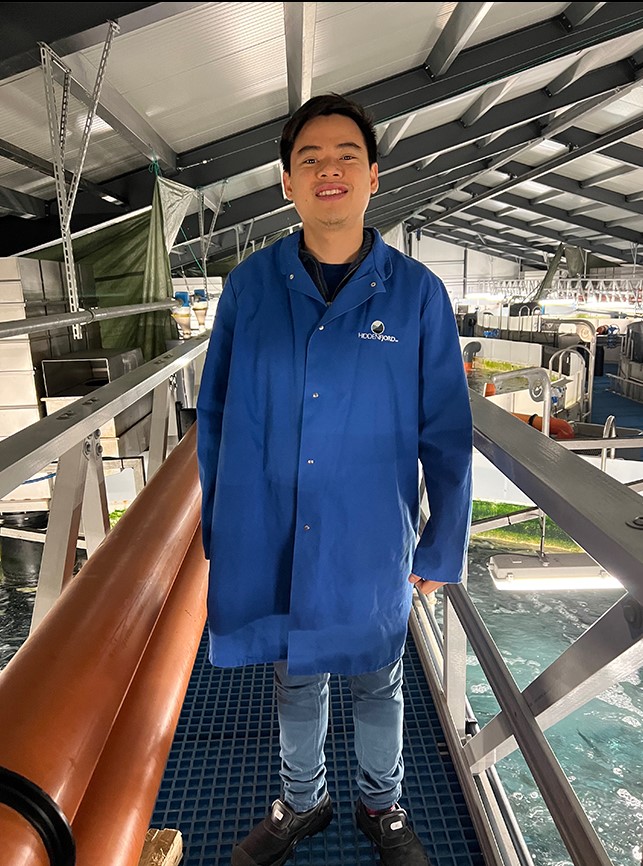
DLN industry internship
2024 was the fifth year of DLN’s successful and highly popular Industry Internship programme. This programme gives PhD students an opportunity to explore biotechnology outside the academic setting. This year there were six internships.
Six internships at six excellent companies
A total of nine companies, both Norwegian and international, showed their interest in the programme by sending in 11 project proposals. Six companies were lucky to host an intern over three months. The Industry Internship programme is run as a collaboration between the DLN research school and DLN Innovation, and all PhD students who are members of the research school can apply. DLN received 33 applications from eligible students. The host organizations are recruited through the DLN industry network and other relevant organizations.
The participating companies for 2023 were: AKVA Group ASA, Molecular AI, AstraZeneca R&D, Authera AS, BioInnovation Institute Foundation (BII), Cytiva Testa Center and Vectron BioSolutions AS
Feedback from the participating companies
It has been a real pleasure hosting DLN fellows at our organisation. The students come with the required skill-set including a quizzical mindset, the ability to research and dive-deep into a particular topic and putting it all together in the end by generated high-quality material.
- BII, BioInnovation Institute
This quote really sums up the general feedback from the companies, who tend to appreciate the highly qualified DLN interns, and the work the interns get done while at their companies. This year, there was a record number of projects submitted, and some companies submitted more than one project. These are projects that are necessary and appreciated, but that due to lack of skills and resources, would not have been done otherwise. Also, several companies have applied to have a DLN intern several years in a row, attesting to the fact that this was a positive experience for them.
DLN Industry Internship Experiences
When the interns are finished with their internship, they are required to write a blog post or other publishable text to communicate their experience of working outside of academia. Currently two blog posts are out, and as the students finish their internships more will become available. The students also present the program and their experiences to different institutional boards and committees to establish the importance of such internships as an integral part of a PhD educational path.
The picture on the left is of Fernando Fernando, who was at AKVA Group.
Read about the interns' experiences and feedback below:
My Experience with the DLN Industry Internship at AKVA Group - Fernando Fernando
My industry internship at Authera: A journey into biotech innovation - Dorentina Osmani
My Experience with the DLN Industry Internship at Vectron BioSolutions- Muhammad Bilal
My Experience with the DLN Industry Internship at AstraZeneca - Maryam Mahootiha
Training and career development – Digital Life Norway Research School
Science based on convergence in line with the Digital Life mission is challenging, intellectually as well as culturally. It requires that talented young researchers are given opportunities to explore new horizons and embark on challenging scientific and societal problems, perhaps at the risk of failure. In addition, they will meet the intellectual challenge of scientific work in true transdisciplinary research groups, integrating knowledge across boundaries. Excellent researcher training and networking through the research school is a main success factor for the entire Digital Life mission.
Promoting Transdisciplinary Integration
The main goals of the DLN Research School are to promote transdisciplinary integration, build a culture for innovation, and create a new collective team spirit among all younger scientists who are connected to digital biotechnology. An important challenge for the research school is to create a distinct scientific profile and a feeling of belonging and commitment in a large and highly transdisciplinary group of PhD students, postdocs, and their supervisors. The most important networking activities are PhD courses, transferrable skills courses, and the annual two-day conference for members. Bringing together young researchers from diverse and transdisciplinary backgrounds is challenging, but in many ways, we have already succeeded in creating forums where PhD students and postdocs can broaden their horizons and networks. There are good reasons to be optimistic about the Digital Life concept among young researchers.
Memberships
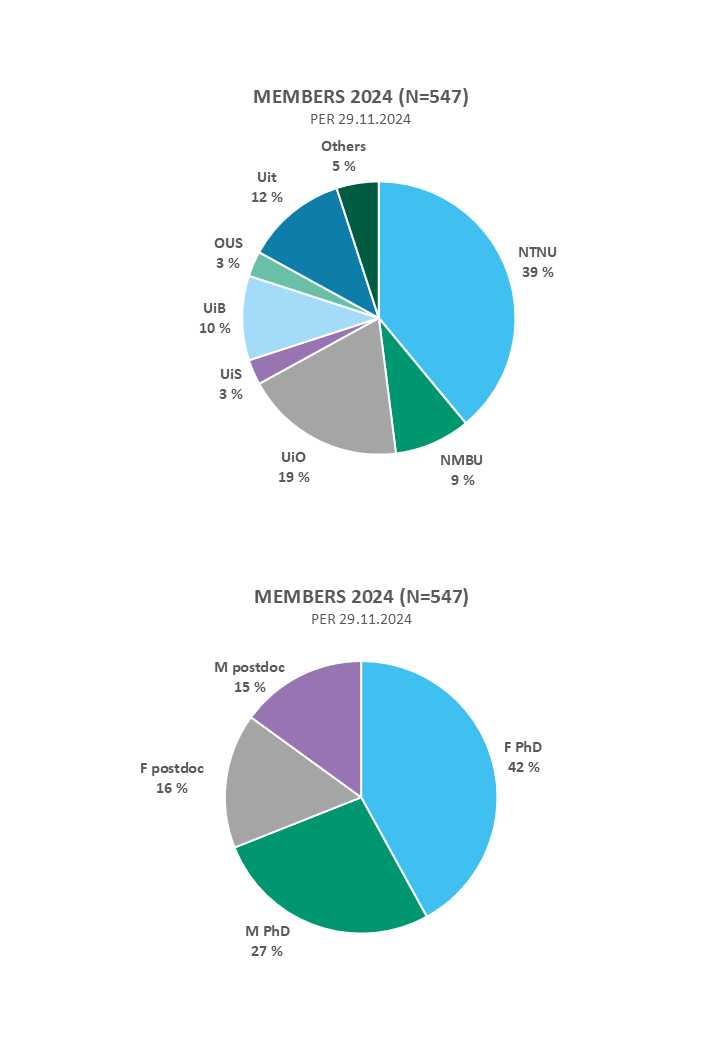
The research school opened for memberships in December 2016, and as of 2024, has a total of 547 members and more than 600 alumni. The research school offers an arena for networking and career development to 319 PhD students and 152 postdocs and researchers, with 317 women and 230 men. Our network also includes PhD supervisors and newsletter subscribers. The members come from a wide variety of scientific fields, from humanities, medical physics, and computer science to more classic disciplines of biotechnology. Additionally, we have provided 17 travel grants to our supported courses.
Events
The primary objective of the research school is to foster a community for PhD students and postdoctoral researchers within the Digital Life Norway disciplines. This is primarily achieved through physical gatherings where young scientists can network and build relationships, supplemented by a range of digital courses. In 2024, we coordinated and supported 33 activities, with approximately 471 participants, a significant increase from 335 in 2023. Although three activities had to be canceled, participation levels remained high. A complete overview of the 2024 events can be found on our website.
For 2024, we decided to also give DLN alumni the opportunity to join our online courses and webinars, further extending the reach and impact of our training programs. This initiative was highly appreciated by alumni, who valued the chance to continue learning and stay connected with the network.
Key new activities
- Social Meetups: 7 networking events across Trondheim (TRD), Oslo (OSL), and Tromsø (TOS), with 96 participants.
- Grant Writing Webinars: 4 webinars with 86 participants, offering crucial guidance on securing research funding.
- Mini-MBA Program: A five-day intensive entrepreneurship bootcamp equipping researchers with fundamental knowledge and practical skills to translate their scientific work into innovation and real-world impact.
- Generative AI Workshop: A specialized course designed for DLN Research School members, attended by 19 participants.
The 8th Annual Research School Conference
The annual conference for and by the members of the research school was held at Hurdalsjøen Hotel & Spa outside of Oslo from October 14-16th. The aim of this conference is to bring together scientists from different backgrounds and places to mingle, learn from each other’s experiences, ideas, and aspirations. Similar to last year, the conference was organized in collaboration with Centre for Digital Life Norway. This year’s conference welcomed 72 Research School members and featured 32 research posters. Notable recognitions included Sofie Søderstrøm as the poster winner and Lucie Pejšková for the best scientific image.
Collaborations
Collaboration remains a key component of our success. In 2024, we strengthened partnerships with key organizations, including:
- TNNN (Research School for Training the Next Generation of Micro- and Nanotechnology Researchers in Norway)
- Micro- and Nanotechnology Researchers in Norway)
- NORBIS (Norwegian Research School in Bioinformatics, Biostatistics and Systems Biology)
- NRSN (Norwegian Research School in Neuroscience)
- Success Beyond the Lab – Career development for scientists.
These collaborations have expanded interdisciplinary learning experiences and networking opportunities for our members.
Plans in 2025
Building on 2024’s success, we aim to:
- Expand our activity offerings and introduce new courses, as well as distribute more travel grants.
- Strengthen (industry) collaborations to provide additional career opportunities for our members.
- Increase accessibility and reach by offering more virtual events and hybrid learning models.
- Expand networking opportunities by organizing social meetups in more cities.
We extend our gratitude to all members and collaborators for making 2024 a productive and impactful year. As we enter our final year in 2025, we look forward to an exciting program with opportunities to learn, collaborate, and grow professionally.
Communication and the Digital Life Norway Community
In order to reach the goals of Centre for Digital Life Norway, effective internal and external communication is crucial. This includes communication between and across the competence hub, the projects, owner institutions and other stakeholders. The Centre also encourages member projects to communicate across disciplines and to make their research accessible to the public through popular science communication.
Monthly newsletters & social media
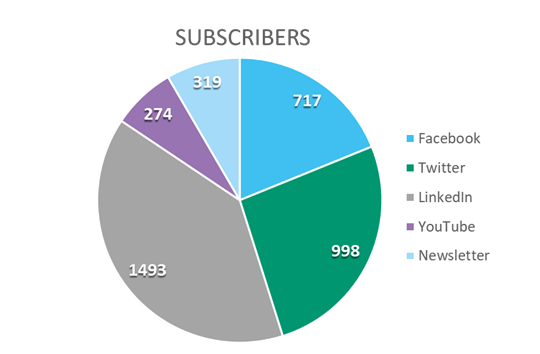
Information about the centre's activities are published on our website digitallifenorway.org and shared through monthly newsletters and on LinkedIn. (We also have channels on X, Facebook, and YouTube)
In 2024 we focused on LinkedIn and saw a 60 percent increase in followers in this channel from 933 followers at the end of 2023 to 1493 followers at the end of 2024. On X (Twitter) we lost 7 percent of our followers as people left the platform in late 2024. We also switched our newsletter platform in 2024, and as we did, cleaned up our subscriber list and thus removed 33 percent of subscribers who were bots or no longer had viable email addresses.
Digital Life Conference 2024
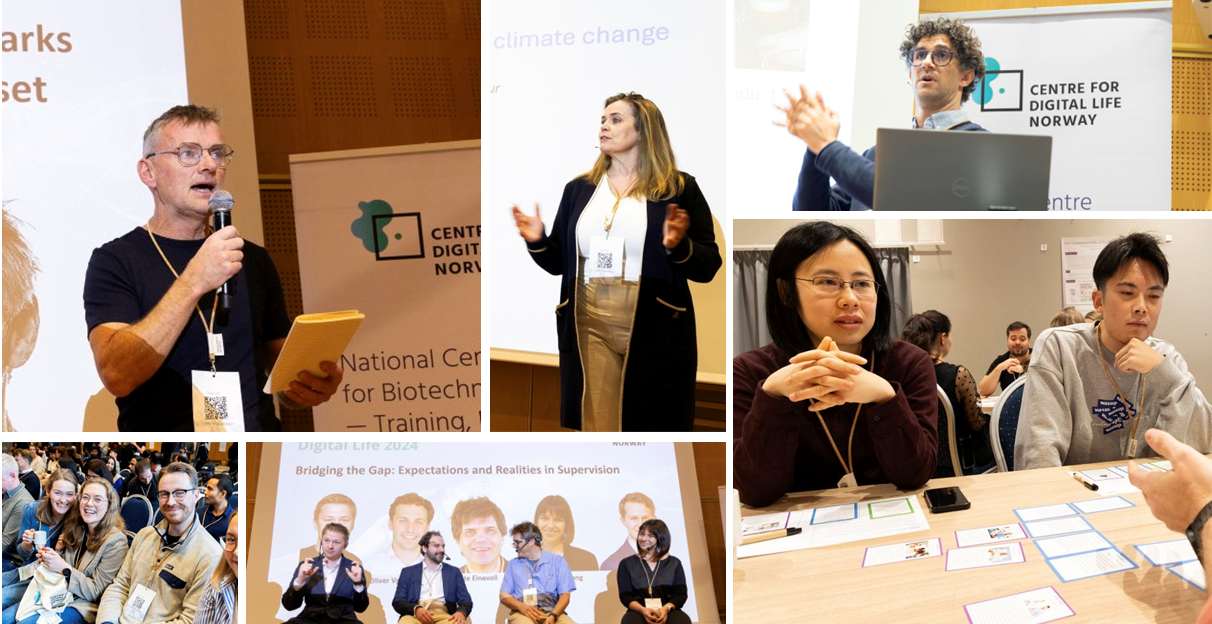
The last annual Digital Life conference was held on October 14.-15th at Hurdalsjøen. The theme was AI in Biotechnology, and the keynote speakers focused on the role of AI and robots in bioprocess engineering, on using blue deeptech for a healthy planet, and on risks associated with life sciences research. In addition, there was a panel on PhD supervision, and four workshops.
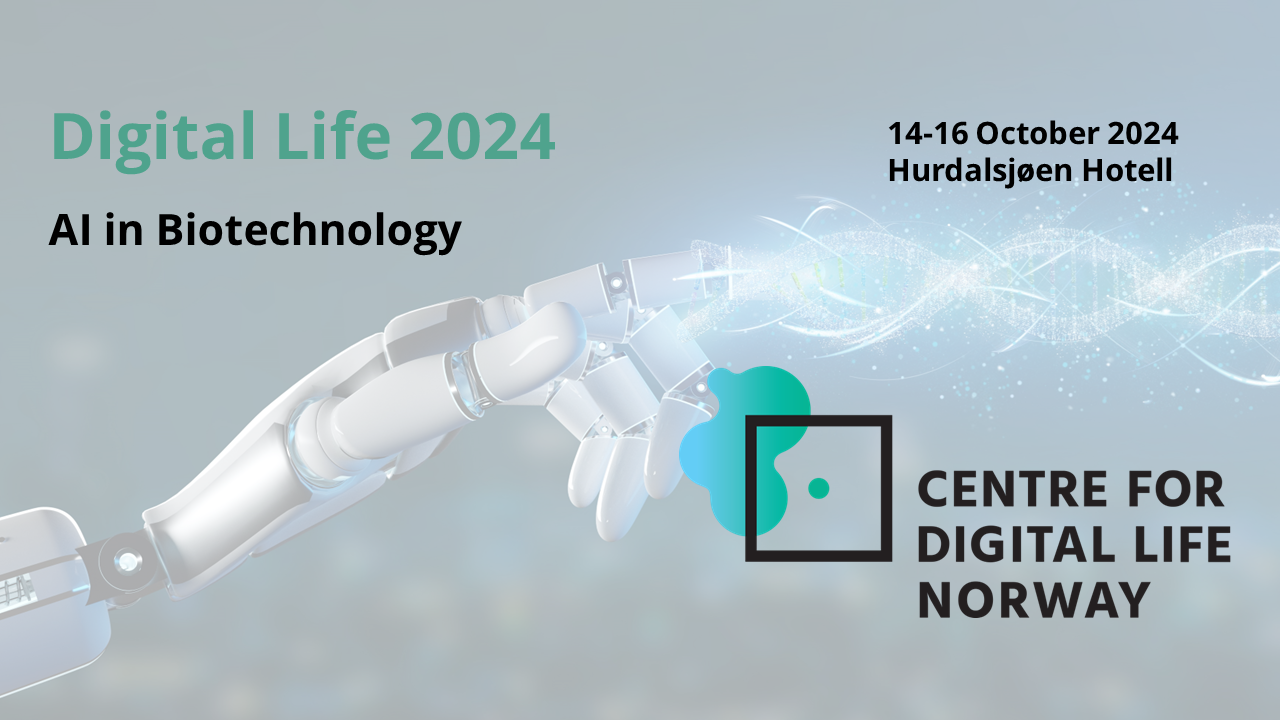
You can find a summary of the conference and videos of selected presentations here.
Poster competition
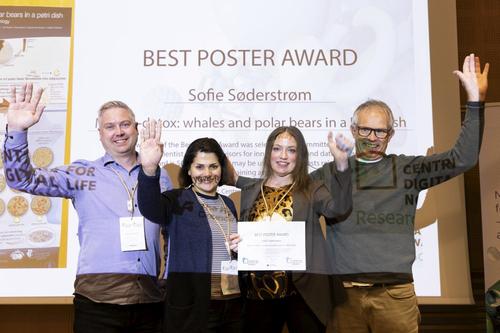
There were 33 posters on a variety of different topics. The winner was Sofie Søderstrøm, with the poster "Marma-detox: whales and polar bears in a Petri dish.” Our two honorable mentions went to Nicole Quattrini with the poster “Identifying Gut Microbiome Signatures of Cancer Development” and Jana Scheffold's poster “Non-canonical Roles of the DNA Sliding Clamp PCNA”
Public event at Forskningsdagene
Popular science helps to increase the participation of more people in society in research and allows them to contribute with their own perspectives.
Centre for Digital Life Norway encourages our member projects to share their research widely and make it understandable for other disciplines and the public in general. This is an important part of working towards the Centre's overall goal to foster transdisciplinary collaboration and contribute to responsible and sustainable creation of value for Norwegian society.
On September 19, The Centre for Digital Life Norway was proud to have researcher in DrugLogics Eirini Tsirvouli as DLN’s representative at National Science Week (Forskningsdagene) as she took the stage at the Norwegian Museum of Science and Technology.
Highlights from our projects
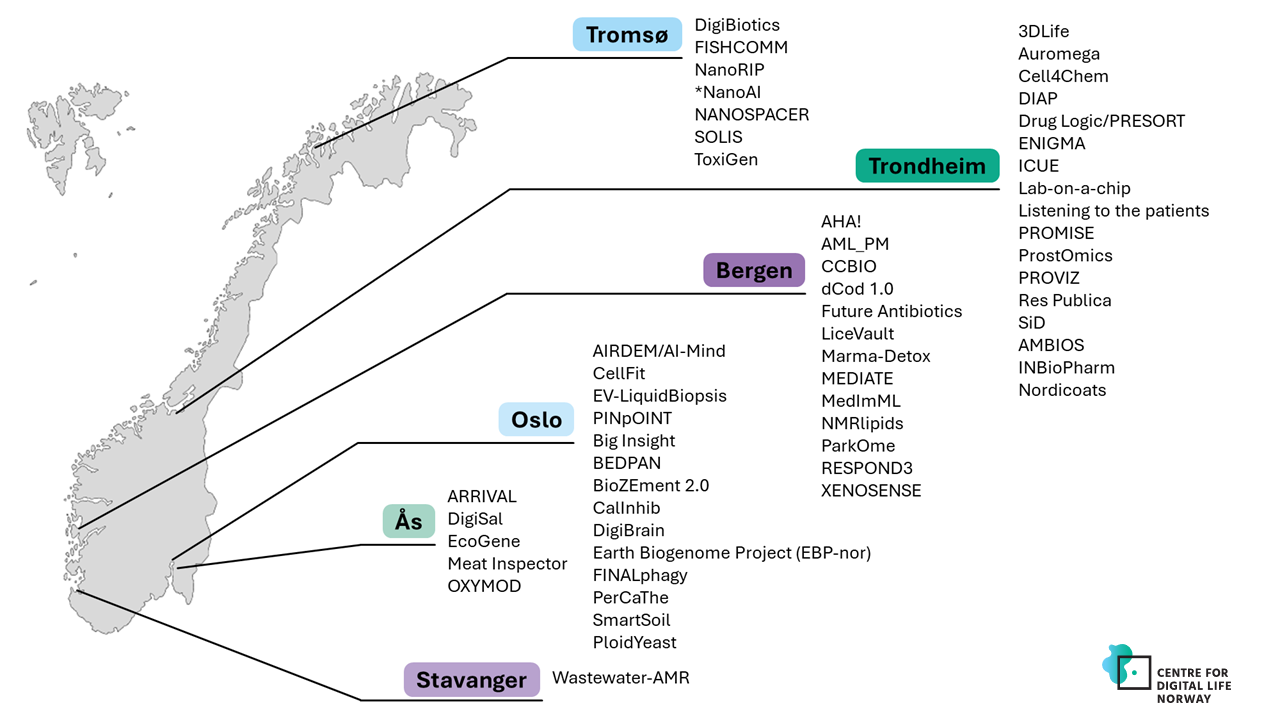
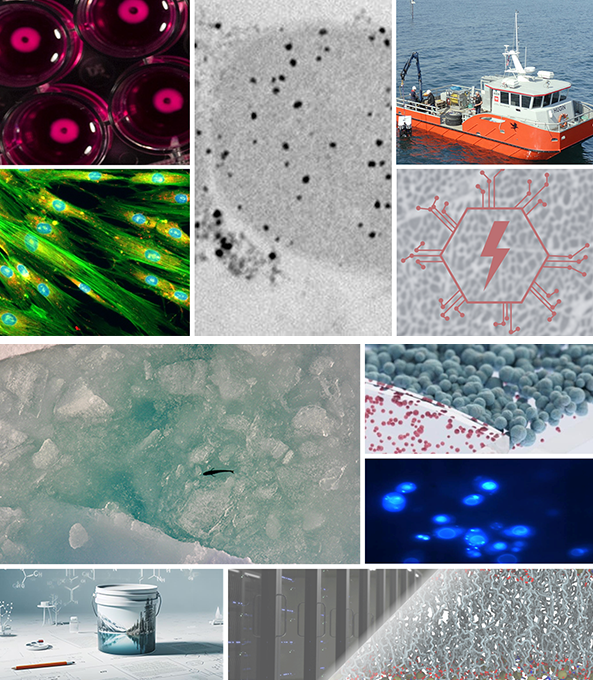
The centre has more than 50 transdisciplinary biotechnology projects led by universities and research institutes all over the country. The projects combine biotechnology with digital technology in health, aquaculture, agriculture, and industrial biotechnology.
Projects that have passed their completion date remain in the DLN network as alumni projects. Both active and alumni projects are shown on this map.
Click on the map to get full overview of all the projects
New projects in 2024
We welcomed ten new projects in 2024:
AMBIOS – Autonomous Marine Biodiversity Mapping and Bioprospecting Platform (Project lead: Marius Eidsaa, SINTEF)
ARRIVAL – Arrival of cellular agriculture - Enabling biotechnology for future food production (Project lead in 2024: Sissel Rønning, Nofima, now Laura García Calvo)
BEDPAN 2.0 – Developing an environmentally friendly, low-cost method for making metallic nanoparticles (Project lead: Dirk Linke, UiO)
ICUE – Illuminating the path to cure endometriosis (Project lead: Hanne Haslene-Hox, SINTEF)
Meat Inspector – An instrument for detecting meat quality and defects (Project lead: Daniel Münch, NMBU)
NANOSPACER – Nanofluidic sizing of extracellular vesicles and biomacromolecules in solution (Project lead: Oliver Vanderpoorten, UiT)
NMRlipids – Understanding lipid systems at an atomistic level (Project lead: Markus Miettinen, UiB)
NordiCoats – New biobased epoxy compounds for high-performance applications (Project lead: Francesca Di Bartolomeo, Alexander Wentzel and Susan Maleki, SINTEF)
PloidYeast – Effects of polyploidization during adaptive evolution in yeasts (Project lead: David Peris, UiO)
ToxiGen – Reproductive toxicity and transgenerational effects of petroleum mixtures in fish (Project lead: Jasmine Nahrgang, UiT)
PhD defences 2024
Several PhD candidates in the research projects in the Centre for Digital Life Norway defended their theses in 2024. Click on the name of their theses to download from the host universities of the candidates.
-
BEDPAN – Developing an environmentally friendly, low-cost method for making metallic nanoparticles

Ana Lucia Campaña Perilla, UiO
- DigiSal – Digital Salmon: from a reactive to a pre-emptive research strategy in aquaculture

Filip Rotnes, NMBU
Metabolic modeling for aquaculture = Stoffskiftemodellering for havbruk
- DigiBrain – From genes to brain function in health and disease

Ingeborg Nymoen Nystuen, UiO
Visual Association Learning in the Parahippocampal Region
- Meat Inspector – An instrument for detecting meat quality and defects

Paweł Suliga, NMBU
Establishing new methods for PSE-like pork defects detection and diagnostics
-
PROVIZ – Developing AI-based software to identify prostate cancer in MR images

Kaia I. Sørland, NTNU
Enhancing prostate cancer MRI through artefact reduction and standardisation
-
RESPOND3 – Responsible early digital drug discovery – using machine learning to tackle a computational bottleneck in the drug discovery and development process

Parveen Gartan, UiB
2024 AT A GLANCE
Event timeline 2024
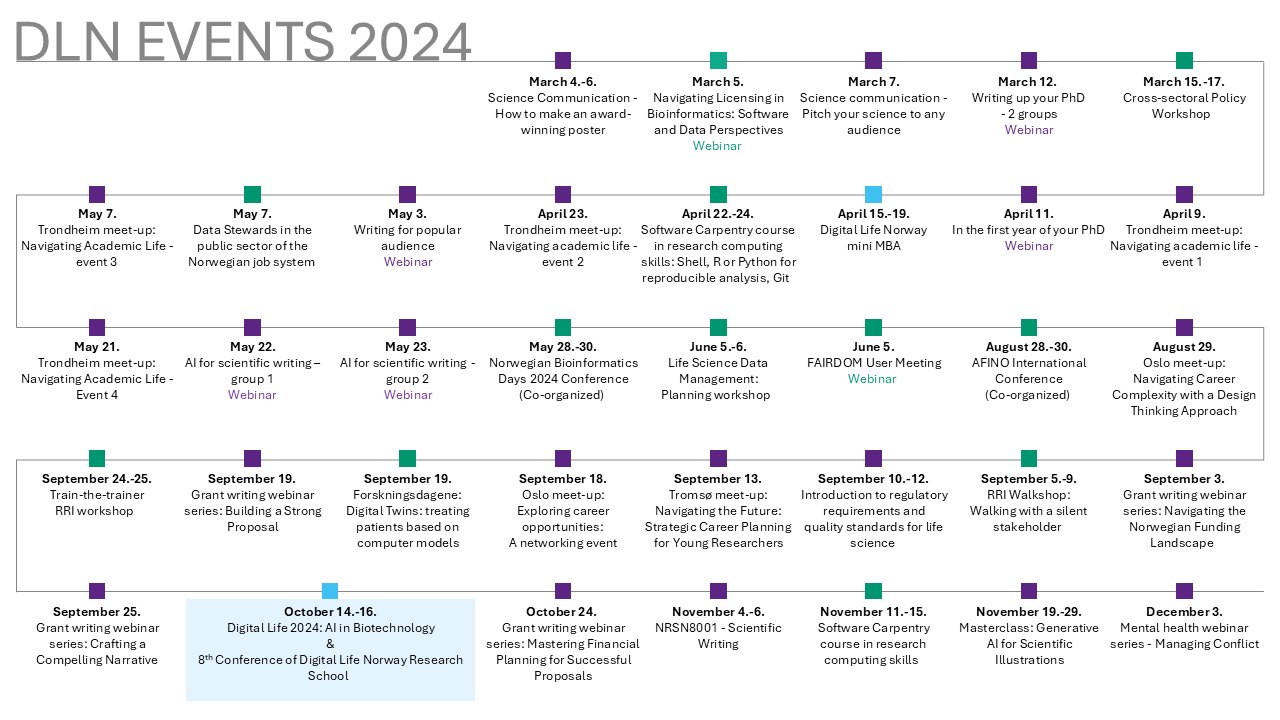
Links to events in 2024
All 2024 events are in the event calendar
People
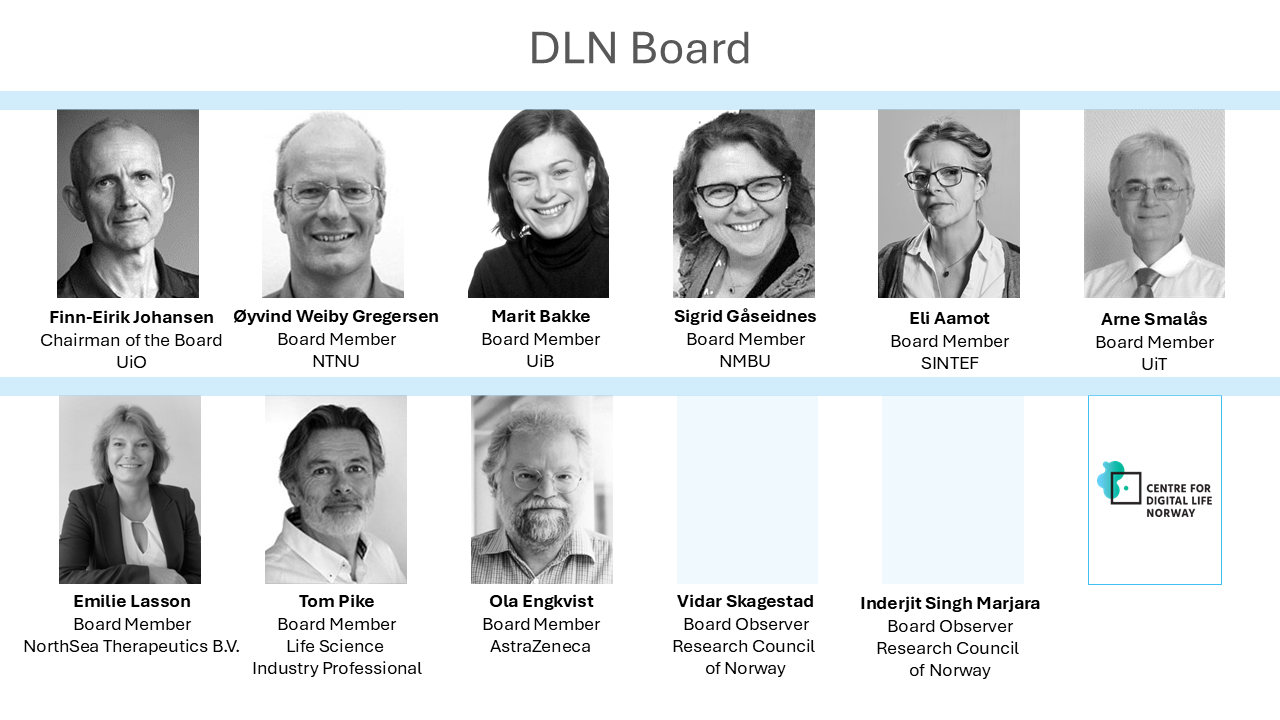
The DLN board is comprised of members from the seven host institutions, NTNU, UiO, UiB, NMBU, OUS, SINTEF and UiT, in addition to industry representation and the Research Council of Norway.
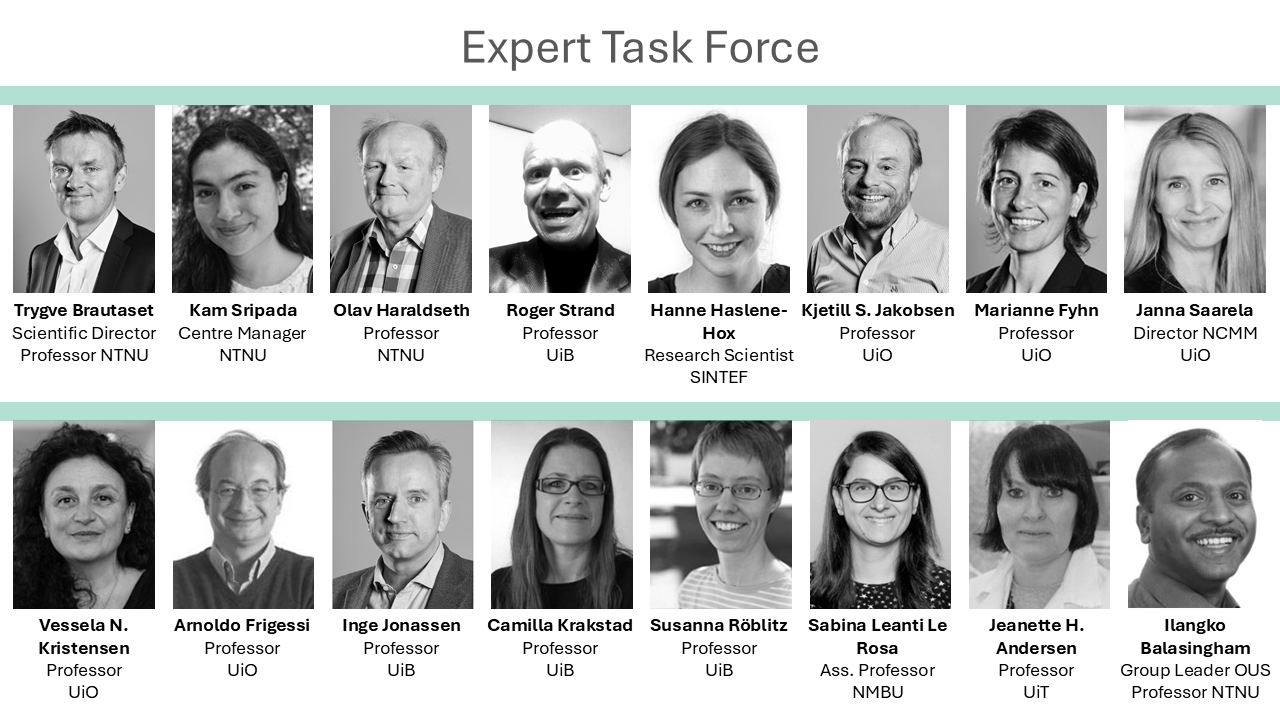
The Expert Task Force is part of the The Centre for Digital Life Norway (DLN) competence hub.
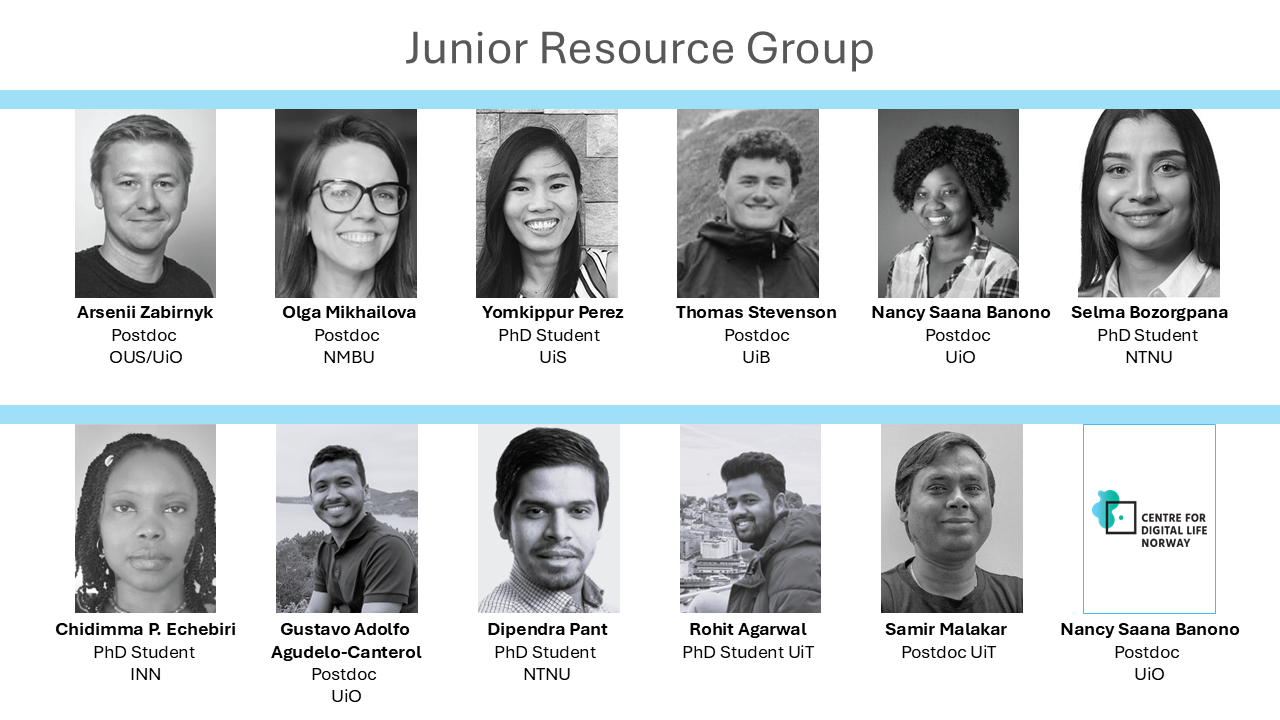
The DLN Junior Resource Group (JRG) serves as the representative voice of young researchers in digital biotechnology in Norway. Its members provide advice and feedback that help shape DLN’s activities to reach PhD students, post-docs, and other early career researchers.
JRG members Rohit Agarwal, Dipendra Pant, Gustavo Agudelo Cantero, Nancy Saana Banono, Olga Mikhailova, and Arsenii Zabirnyk had an eventful 2024. From addressing challenges faced by early-career researchers to organizing social meet-ups across different cities and hosting a panel discussion at our annual conference, Digital Life 2024, the JRG has been hard at work. To top it all off, the team welcomed four new members at the end of the year: Selma Bozorgpana, Samir Malak, Thomas Stevenson, and Yomkippur Perez. Two members left the JRG in 2024: Chidimma Phoebe Echebiri and Nancy Saana Banono, and we express our gratitude for their contributions to JRG. Read more here
Early career researchers are encouraged to reach out to the JRG with any questions or feedback.
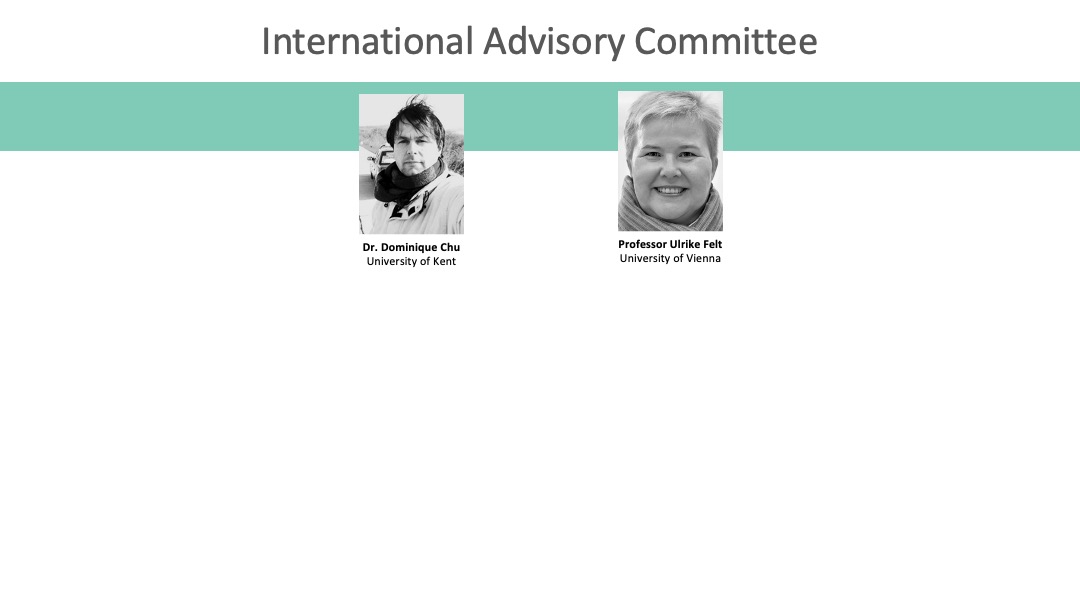
The Digital Life Norway (DLN) International Advisory Committee (IAC) is a stakeholder panel consisting of internationally renowned experts in fields of high relevance to the DLN mission, with a proven track record in managing large and complex academic structures. The IAC serves as consultants and advisors to the DLN competence hub by reviewing the progress of DLN 2.0 with an international lens. In addition, the IAC contributes independent recommendations on academic matters, DLN's internal operations, and DLN’s role as a national network.
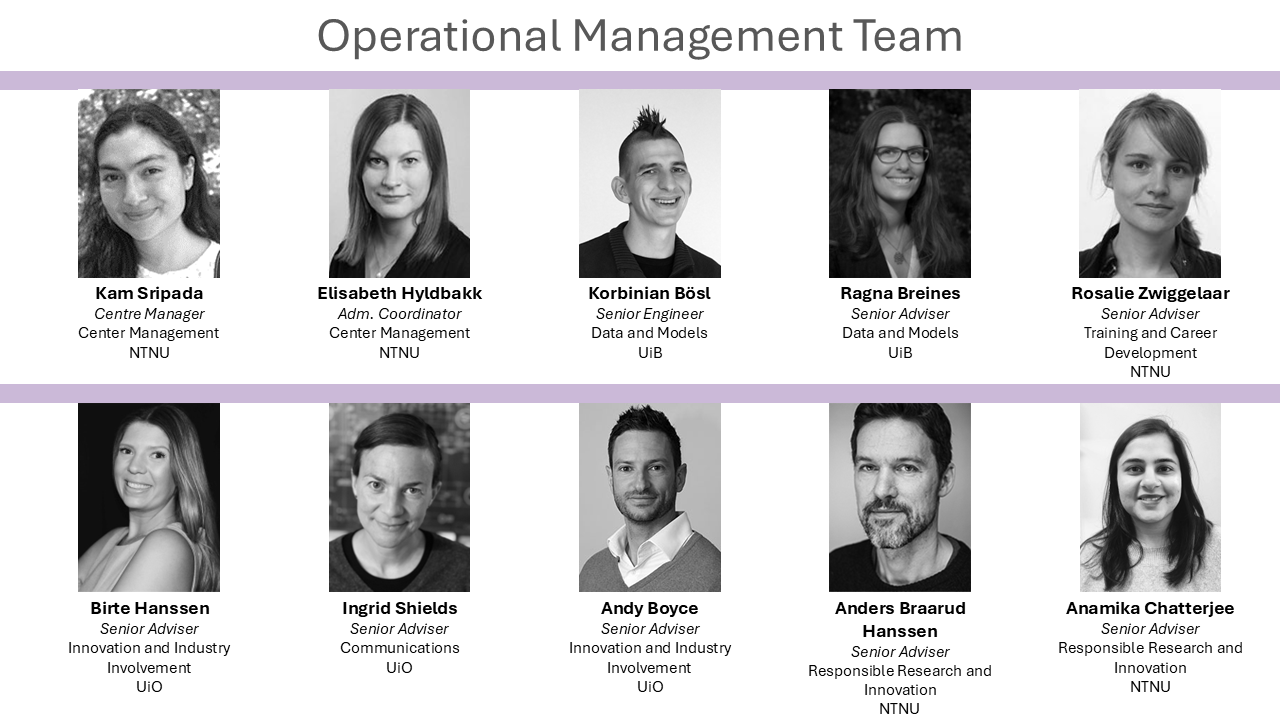
The operational management team of the Centre for Digital Life Norway (DLN) has expertise in training, innovation, data and models, responsible research and innovation (RRI) and communications.
The team is part of the centre's competence hub and consists of a centre manager and senior advisers employed at NTNU, UiO and UiB.